
Your child says they don’t need help.
Maybe they tell you they can stop anytime. Maybe they insist they’re just stressed, tired, or going through a phase. Maybe they sound calm enough that you start questioning your own instincts.
And yet something inside you still feels unsettled.
For parents of young adults struggling with mental health issues, substance use, or both, this stage can feel emotionally brutal. Your child is legally an adult. They can refuse treatment. They can leave conversations. They can tell you to back off.
But being an adult does not magically make someone emotionally stable or safe.
Sometimes the people who need the most support are also the ones pushing it away the hardest. That’s why many families begin researching options like live-in treatment and round-the-clock support long before their child is willing to admit how serious things have become.
Denial Can Look Surprisingly Rational
One of the biggest misconceptions parents carry is the belief that someone in real crisis will obviously look out of control.
But many young adults become extremely skilled at appearing “fine.”
They know how to say the right things. They know how to minimize symptoms. They know how to reassure worried parents just enough to buy more time.
You might hear:
- “I’m just overwhelmed.”
- “Everyone drinks/smokes sometimes.”
- “You’re overreacting.”
- “I already know what I need to do.”
- “I don’t need treatment.”
Meanwhile, you’re noticing:
- Emotional withdrawal
- Mood swings
- Isolation
- Lying or secrecy
- Missed responsibilities
- Signs of depression
- Escalating substance use
- A growing sense that your child is disappearing emotionally
That disconnect can make parents feel like they’re losing their minds.
But clinically, this is common. People struggling with mental health or addiction often protect the very thing harming them. Not because they’re manipulative monsters—but because fear, shame, hopelessness, and denial are powerful.
Sometimes the illness speaks louder than the person underneath it.
Parents Often Notice the Shift Before Anyone Else
There’s a particular kind of grief that comes from watching your child slowly become harder to reach.
You remember who they used to be. The version of them that laughed more easily. The version that talked about the future. The version that felt emotionally present.
Then little things start changing.
Maybe they stop answering calls. Maybe their personality feels flatter. Maybe they become defensive over simple questions. Maybe every conversation feels tense or unpredictable.
Parents frequently dismiss these changes at first because they don’t want to overreact. Especially with young adults, there’s pressure to give space and respect independence.
But deep down, many parents already know something is wrong.
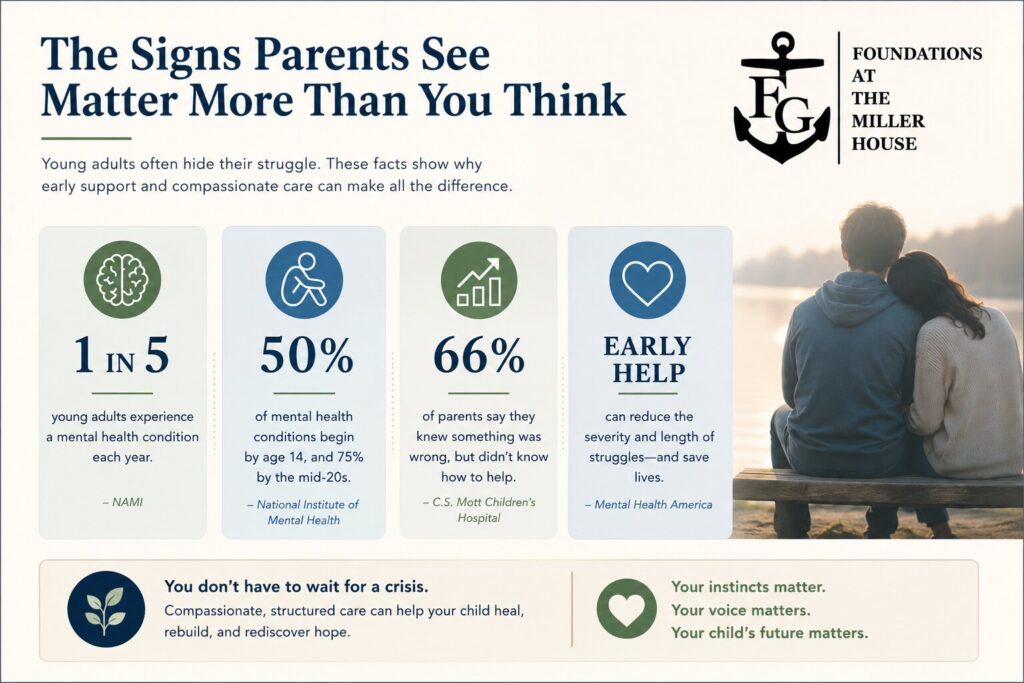
That instinct matters more than you think.
Severe Depression Doesn’t Always Look Like Sadness
Many families imagine depression as crying constantly or staying in bed all day.
Sometimes it looks like that. But severe depression can also look like:
- Irritability
- Emotional numbness
- Chronic exhaustion
- Detachment
- Substance use
- Reckless behavior
- Sleeping too much or not at all
- Giving up on responsibilities
- Saying “I’m fine” in a completely flat voice
Young adults especially may hide depression behind sarcasm, anger, isolation, or partying.
Parents often search for severe depression help after realizing their child isn’t simply “going through something.” They’re struggling to function emotionally in ways that are becoming dangerous or unsustainable.
And unfortunately, insight tends to shrink as depression deepens.
The more overwhelmed someone becomes, the harder it may be for them to recognize how serious things actually are.
Resistance to Treatment Is Often Rooted in Fear
It’s easy for families to become frustrated.
You may think:
“How can they not see this?”
“Why won’t they accept help?”
“What else are we supposed to do?”
Underneath resistance, though, there’s often enormous fear.
Fear of losing freedom.
Fear of being judged.
Fear of failing treatment again.
Fear of disappointing family members.
Fear that recovery will feel empty or impossible.
Some young adults also worry treatment means their life is officially “bad enough” to require intervention. Accepting help can feel emotionally overwhelming because it forces them to confront realities they’ve been trying desperately to avoid.
That’s why arguments rarely create breakthroughs.
Shame tends to make people dig in deeper.
Calm, steady concern is usually more effective than panic or threats.
“They’re Still Functioning” Can Be Misleading
Many parents delay seeking higher levels of care because their child hasn’t fully collapsed yet.
They may still have moments where they seem okay. They may still hold a job temporarily. They may still show up to dinner occasionally.
But functioning is not the same thing as stability.
A person can appear functional while internally falling apart.
Think of it like driving a car with the check engine light flashing for months. The car may still move for a while. But eventually, something gives out.
Mental health crises and addiction often work the same way.
By the time consequences become impossible to ignore, the emotional, physical, and relational damage is often much deeper than families realized.
Early intervention matters because waiting for a catastrophe rarely creates clarity. More often, it creates trauma.
Why Residential Care Can Sometimes Be Necessary
Parents sometimes hesitate to consider residential care because it feels too extreme.
They worry:
- “What if this ruins our relationship?”
- “What if they hate me for this?”
- “What if I’m overreacting?”
Those fears are understandable.
But supportive live-in treatment is not about punishment or control. It’s about stabilization.
When someone is stuck in a cycle of depression, emotional volatility, relapse, or self-destructive behavior, environment matters. Constant stress, unhealthy relationships, easy access to substances, and emotional isolation can keep the cycle going no matter how much the person wants things to change.
A structured setting creates interruption.
It gives people space to:
- Sleep consistently
- Receive therapy regularly
- Stabilize emotionally
- Rebuild routines
- Address underlying mental health issues
- Step away from triggers
- Develop coping skills with support nearby
For some families, this level of care becomes necessary not because their child is “bad,” but because they are overwhelmed, unsafe, or unable to stabilize on their own.
You Are Allowed to Stop Waiting for Absolute Proof
Many parents spend months—or years—trying to gather enough evidence to justify stepping in.
But emotional crises don’t always arrive dramatically.
Sometimes they unfold quietly:
- A personality slowly fading
- Increasing hopelessness
- Constant emotional instability
- More lying
- More isolation
- More risk-taking
- Less joy
- Less connection
- Less ability to cope
You don’t need to wait until your child completely implodes to take your concerns seriously.
One of the most heartbreaking realities clinicians see is families who knew something was deeply wrong long before intervention happened.
Not because they didn’t care.
Because they were afraid of making the wrong call.
Loving Them Doesn’t Mean You Have to Pretend Everything Is Fine
Parents often carry crushing guilt in these situations.
You replay every decision:
- Did I enable too much?
- Was I too strict?
- Did I miss signs earlier?
- Am I pushing too hard now?
- What if they stop talking to me?
But loving your child does not require pretending they’re okay when they clearly aren’t.
Sometimes love looks soft.
Sometimes love looks like difficult conversations.
Sometimes love looks like holding boundaries while your heart breaks.
And sometimes love means recognizing that your child’s fear of treatment does not automatically mean treatment isn’t necessary.
That distinction matters.
Because many people who eventually recover once insisted they didn’t need help at all.
FAQ
How do I know if my child needs a higher level of care?
There’s rarely one single moment that makes the answer obvious. Usually, parents notice a pattern: worsening depression, repeated substance use, emotional instability, isolation, inability to function, or escalating crises. If your child’s mental health is interfering with daily life or safety, it may be time to explore more structured support.
What if my child refuses treatment completely?
Resistance is extremely common, especially among young adults. Fear, shame, denial, and hopelessness often play a major role. While you may not be able to force every decision, families can still set boundaries, seek professional guidance, and explore intervention strategies that encourage treatment conversations without escalating conflict.
Is residential care only for severe addiction?
No. Residential programs can also help individuals struggling with depression, anxiety, trauma, emotional instability, or co-occurring mental health and substance use disorders. Sometimes someone needs distance from daily stressors and consistent therapeutic support to stabilize.
Will my child hate me for suggesting treatment?
Parents fear this constantly. In the short term, your child may become angry or defensive. But many families later discover that intervention came from love—not punishment. Protecting someone during a dangerous period is not betrayal.
Can depression really make someone refuse help?
Yes. Severe depression often affects motivation, insight, energy, and hope. A person may genuinely believe nothing will help, or they may feel too emotionally exhausted to seek support. Refusing help does not necessarily mean they’re okay.
What if things don’t seem “bad enough” yet?
Families often wait for undeniable disaster before acting. But early intervention can prevent deeper emotional, relational, and physical harm. You do not need to ignore warning signs simply because your child still has moments of functioning.
Your child may insist they’re okay. They may tell you they don’t need help. But if your instincts keep telling you something is seriously wrong, it’s okay to listen to that voice instead of silencing it.
Parents are often carrying more grief, fear, and responsibility than anyone realizes. You do not have to navigate this alone.
Call (774) 252-6966 or explore our residential treatment program services to learn more about compassionate support options for young adults struggling with mental health and substance use.