

I thought my relapse was about alcohol.
For months, that’s the story I told myself.
I had over 90 days sober. People were proud of me. I was proud of me. Then one bad decision became another, and before long, I was drinking again.
When I relapsed, I became obsessed with figuring out how it happened.
I replayed every conversation.
Every mistake.
Every craving.
Every excuse.
I treated the relapse like a crime scene, convinced that if I examined it closely enough, I’d discover the exact moment everything went wrong.
But eventually I realized something uncomfortable.
The drinking wasn’t the first thing that came back.
The drinking was the last thing.
The anxiety came first.
The isolation came first.
The exhaustion came first.
The depression came first.
The drinking simply followed.
If you’re searching for help because alcohol use and mental health struggles seem connected, I want you to know you’re not alone. Many people eventually realize that the substance wasn’t the entire problem. It was often the solution they were using for a problem they hadn’t fully understood yet.
When I started looking into options for live-in support that addresses both mental health and substance use, it was the first time I stopped asking, “How do I stop drinking?” and started asking, “Why did drinking feel necessary again?”
That question changed everything.
The Relapse Started Long Before the First Drink
For a long time, I thought relapse happened in a moment.
Now I think it usually happens much earlier.
Mine began quietly.
Nobody noticed.
I was still showing up for work.
Still answering texts.
Still laughing at jokes.
Still doing all the things people expected me to do.
But internally, things were changing.
My anxiety started creeping back in.
I stopped sleeping well.
The routines that had helped me stay grounded became harder to maintain.
I withdrew from people who understood recovery.
I convinced myself I was fine.
Then I convinced myself I didn’t need as much support.
Then I convinced myself one drink wouldn’t matter.
Looking back, the relapse wasn’t sudden at all.
It was a slow leak in a tire I forgot to check.
By the time I noticed, I was already struggling to stay on the road.
I Was Trying to Solve Emotional Pain Without Naming It
One of the hardest truths I had to accept was that alcohol had never been my real goal.
Relief was.
I didn’t drink because I loved alcohol.
I drank because I loved what it temporarily did to anxiety.
I loved how it softened difficult emotions.
I loved how it quieted racing thoughts.
I loved how it gave me a brief break from myself.
The problem was that the relief never lasted.
Whatever I was running from always came back.
Usually stronger.
That’s what makes recovery so complicated for many people.
Removing alcohol is important.
But if depression, anxiety, trauma, or emotional pain remain untouched, the urge to escape often stays alive.
It’s like pulling weeds without addressing the roots underneath the soil.
Shame Kept Me Stuck Longer Than the Relapse Did
The relapse hurt.
The shame hurt more.
If you’ve relapsed after a period of sobriety, you probably know the voice I’m talking about.
The one that says:
“You blew it.”
“You should know better.”
“Everyone is disappointed in you.”
“You’re back at square one.”
That voice followed me everywhere.
And because of it, I delayed asking for help.
I thought I needed to fix things on my own first.
I thought I needed to prove I was serious before reaching out.
I thought people would judge me.
Instead, when I finally became honest, I found something surprising.
Most people weren’t shocked.
Many had been exactly where I was.
They understood something I didn’t yet understand:
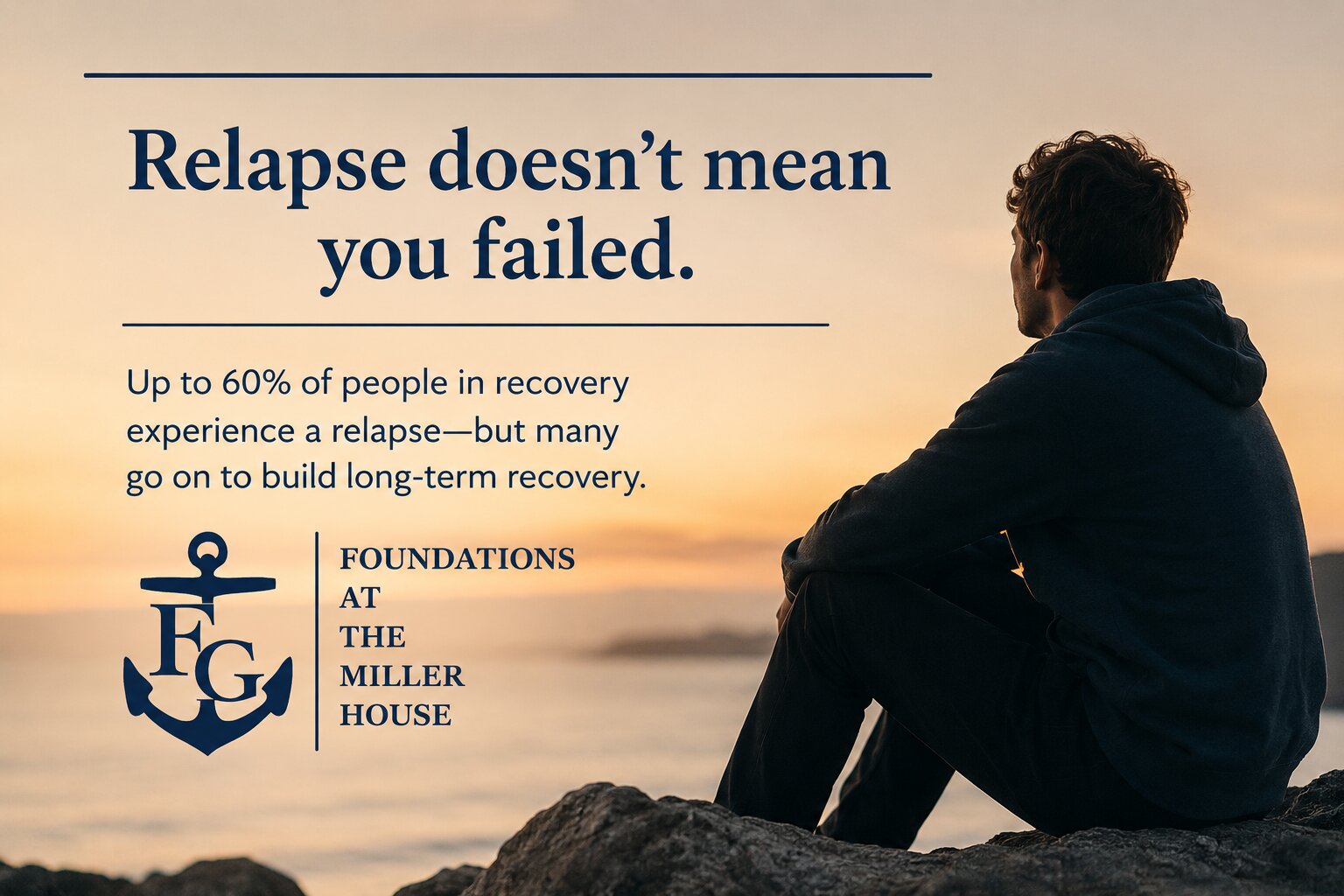
Relapse isn’t always evidence that recovery failed.
Sometimes it’s evidence that recovery needs to go deeper.
When Mental Health and Alcohol Start Feeding Each Other
At a certain point, I couldn’t tell where one problem ended and the other began.
Was I anxious because I was drinking?
Or drinking because I was anxious?
Was I depressed because of alcohol?
Or using alcohol because I was depressed?
The answer was both.
Mental health challenges and substance use often become tangled together in ways that are difficult to separate.
Anxiety increases the desire to escape.
Alcohol temporarily reduces anxiety.
Alcohol then creates more anxiety.
The cycle repeats.
Depression creates emotional pain.
Alcohol provides temporary numbness.
Alcohol worsens depression.
The cycle repeats.
Eventually, it becomes impossible to address one issue while ignoring the other.
That’s why many people eventually search for terms like inpatient dual diagnosis near me, even if they’ve never heard that phrase before.
They’re not looking for a label.
They’re looking for an explanation.
They’re trying to understand why treating only the drinking never seemed to fully solve the problem.
The Moment I Stopped Trying to Look Strong
One of the turning points in my recovery came when I stopped trying to look okay.
For months, I had been managing appearances.
I was giving people carefully edited versions of the truth.
I was minimizing my struggles.
Downplaying my drinking.
Pretending things weren’t as bad as they felt.
That takes a tremendous amount of energy.
Eventually, I got tired.
And strangely enough, that exhaustion helped me.
Because it forced honesty.
When I finally admitted how much I was struggling, support became possible.
People can’t help with problems they don’t know exist.
Recovery often begins where performance ends.
I Learned That Healing Doesn’t Usually Feel Dramatic
I expected recovery to arrive like a lightning bolt.
A breakthrough.
A revelation.
A single moment that changed everything.
That’s not what happened.
Most of my progress felt incredibly ordinary.
One good conversation.
One honest therapy session.
One night of better sleep.
One difficult emotion I sat with instead of escaping.
One healthier decision repeated enough times to become a habit.
Healing wasn’t dramatic.
It was repetitive.
And that’s actually what made it sustainable.
Recovery is often less like winning a race and more like learning how to walk again after an injury.
The progress is gradual.
The victories are sometimes invisible.
But they add up.
I Needed More Support, Not More Willpower
For years, I thought the solution was becoming stronger.
More disciplined.
More determined.
More motivated.
Eventually I realized I wasn’t lacking willpower.
I was lacking support.
That’s a very different problem.
Support creates accountability.
Support creates perspective.
Support creates safety when things start slipping.
Most importantly, support reminds you that you don’t have to carry everything alone.
This became especially important once I recognized how much my mental health was influencing my recovery.
Because no amount of determination can replace the value of appropriate care, honest conversations, and consistent support.
If You’re Searching for Answers Right Now
Maybe you’ve relapsed.
Maybe you’re questioning whether treatment would help again.
Maybe you’re realizing that alcohol isn’t the only thing you’ve been struggling with.
If that’s where you are, I want to tell you something I wish someone had told me.
You are not starting over.
The relapse happened.
The pain is real.
The consequences may be significant.
But you’re not beginning from the same place you started before.
You have experience.
You have knowledge.
You have insight.
You know more about yourself today than you did before.
Recovery after relapse often feels less like returning to the beginning and more like returning to unfinished work with better tools.
That doesn’t make it easy.
But it does make it possible.
Frequently Asked Questions
Can mental health issues cause someone to relapse?
Mental health conditions such as anxiety, depression, trauma, and chronic stress can increase vulnerability to relapse. When emotional distress remains untreated, substances may begin to feel like a way to cope or escape.
Why does relapse happen after months of sobriety?
Relapse often develops gradually. Emotional isolation, stress, untreated mental health symptoms, changes in routine, and reduced support can all contribute to relapse long before someone picks up a drink.
Is it common for alcohol use and mental health struggles to occur together?
Yes. Many people experience both conditions at the same time. Alcohol may temporarily reduce emotional discomfort, but it often worsens mental health symptoms over time.
Does relapse mean treatment didn’t work?
No. Relapse can be part of the recovery process for some individuals. It may indicate that additional support, different strategies, or more comprehensive treatment is needed.
How do I know if I need more than outpatient support?
If alcohol use and mental health symptoms are both significantly affecting your daily life, relationships, safety, or ability to function, a more structured level of care may be worth exploring.
Can I recover after multiple relapses?
Absolutely. Many people who achieve long-term recovery have experienced more than one relapse. Recovery is rarely a straight line, and setbacks do not erase the progress you’ve already made.
What should I do if I’m afraid to ask for help again?
Start small. Reach out to one trusted person. Make one phone call. Ask one honest question. Recovery often begins with a single act of honesty rather than a grand commitment.
If alcohol use and mental health concerns are both affecting your life, you don’t have to untangle them alone. There is support available, and there is a path forward, even if it doesn’t feel obvious today.
Call (774) 252-6966 or visit our residential treatment program services to learn more about our residential treatment program services.