

There’s a certain point where exhaustion stops feeling normal and starts feeling frightening.
At first, you think you’re just stressed. Maybe overwhelmed. Maybe burnt out. You tell yourself you’ll sleep tomorrow night. That your body will eventually shut down and reset.
But then another night passes.
Your thoughts start racing faster. Panic becomes constant. Your chest feels tight for no clear reason. Small problems suddenly feel life-ending. You can’t focus long enough to finish a sentence without your brain spiraling somewhere dark.
And eventually, a terrifying question starts echoing in your head:
Am I having a mental breakdown?
If you’re here searching for answers after days without sleep and nonstop panic, you are not weak. You are not dramatic. And you are not the only person who has ever felt this close to the edge.
Sometimes the nervous system gets pushed far beyond what it was meant to carry alone. Exploring live-in mental health support can be part of stabilizing that overwhelm before things become even harder to manage.
Sleep Deprivation Changes the Way the Brain Experiences Reality
People often underestimate how deeply sleep affects emotional stability.
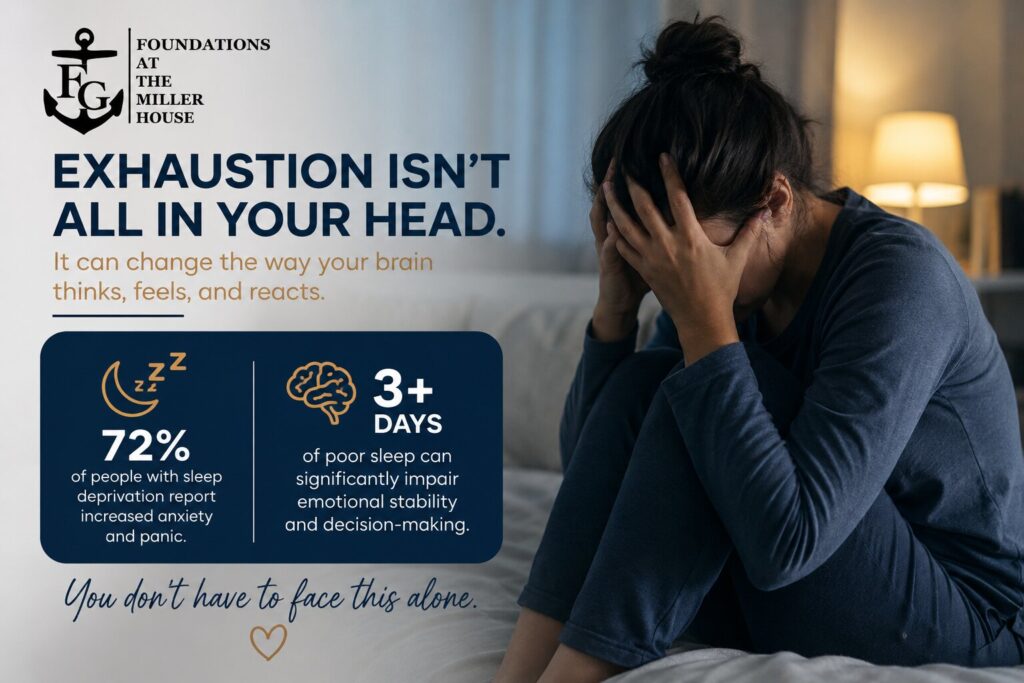
After one bad night, you might feel irritable or foggy. But after multiple nights without real rest, the brain struggles to regulate almost everything — emotions, focus, memory, stress response, even perception.
That’s why panic and sleep deprivation often become tangled together.
You may notice:
- Racing thoughts that refuse to slow down
- Feeling emotionally trapped in your own mind
- Constant dread without a clear explanation
- Physical shaking or chest tightness
- Feeling disconnected from reality or yourself
- Sudden crying spells
- Trouble concentrating on basic conversations
- Increased paranoia or catastrophic thinking
- Feeling emotionally “stuck on high alert”
People often become terrified during this stage because their thoughts stop feeling predictable.
And honestly, that fear makes sense.
The brain is exhausted. The nervous system is overloaded. Everything starts feeling louder, sharper, and harder to control.
One person once described severe sleep deprivation like “trying to think clearly inside a fire alarm.”
That image feels accurate for a lot of people.
Panic Can Make You Feel Like You’re Dying — Even When You Aren’t
Panic attacks are incredibly physical experiences.
Your heart races. Your breathing changes. Your muscles tense. Your vision may blur. Some people feel dizzy, numb, detached, nauseous, or unable to sit still.
When panic combines with severe exhaustion, it can become genuinely terrifying.
A lot of people start wondering if they’re:
- Having a heart attack
- Losing touch with reality
- Developing psychosis
- About to collapse emotionally
- Permanently damaging their brain
And the scariest part is that panic doesn’t feel psychological while it’s happening. It feels physical. Immediate. Urgent.
The body behaves as if danger is everywhere.
That’s why reassurance from other people often stops helping after a certain point. Your nervous system is already convinced something catastrophic is happening.
It’s like your internal alarm system gets stuck in the “on” position.
Emotional Collapse Usually Builds Slowly Before It Becomes Obvious
Most people imagine a breakdown as one dramatic moment.
In reality, it’s often the result of prolonged overwhelm that slowly drains the nervous system over time.
Stress stacks quietly.
Work pressure. Trauma. Grief. Anxiety. Isolation. Family strain. Depression. Relationship problems. Substance use. Financial fear. Emotional suppression.
Eventually, the brain and body stop compensating the way they once could.
That’s why people searching for information about nervous breakdown symptoms are often not looking for a formal diagnosis. They’re trying to understand whether human beings can actually become emotionally overloaded to the point of collapse.
The answer is yes.
Not because someone is weak. Because human beings have limits.
And many people push far beyond those limits before admitting they need support.
The Fear Gets Worse at Night
There’s something uniquely brutal about panic after midnight.
The world becomes quieter, but your thoughts get louder.
People often describe nighttime anxiety as feeling trapped with their own mind. There are fewer distractions. Less movement. Less reassurance. Just you, exhaustion, and a nervous system that refuses to power down.
Some people pace. Others scroll endlessly on their phone hoping distraction will tire them out. Some become terrified of even trying to sleep because they’re afraid of another night lying awake with panic spiraling through their body.
And after enough sleepless nights, even bedtime itself can trigger anxiety.
That cycle becomes incredibly hard to break alone.
Especially when exhaustion starts affecting emotional regulation, judgment, and perception.
You Don’t Need to “Look Unstable” to Be Struggling Seriously
A lot of people experiencing severe panic and sleep deprivation still go to work. Answer texts. Smile at people. Keep functioning just enough to hide how bad things really feel.
That’s part of what makes emotional overwhelm so isolating.
From the outside, people may say:
“You seem okay.”
Meanwhile, internally, you may feel like you’re barely holding yourself together.
Many first-time treatment seekers delay asking for help because they think they need to fully fall apart before they’re allowed to need support.
But suffering does not become more legitimate only after total collapse.
If you feel unsafe inside your own mind, exhausted beyond what you can manage, or trapped in nonstop panic, those experiences matter now — not later.
Sometimes the Nervous System Needs More Than Willpower
People often try to “push through” severe anxiety and exhaustion by forcing themselves to stay productive.
That strategy works for a while.
Until it doesn’t.
There comes a point where logic and determination alone may not calm an overwhelmed nervous system anymore.
That’s because panic is not just mental. It’s physical.
Your body becomes flooded with stress hormones. Sleep disruption compounds emotional instability. The brain remains stuck in survival mode for so long that calm starts feeling unreachable.
This is one reason higher levels of support can sometimes help people who feel trapped in nonstop panic and exhaustion.
Not because they’re broken. Because their system may need:
- Consistent rest
- Reduced stimulation
- Emotional safety
- Medical or psychiatric support
- Structured routines
- Distance from overwhelming stressors
- Support nearby during emotional spikes
Sometimes healing starts with stabilizing the body enough for the mind to finally exhale.
Severe Exhaustion Can Distort Your Thoughts About Yourself
One of the cruelest things about prolonged panic and sleep deprivation is how convincing hopeless thoughts become.
When the brain is exhausted, everything feels permanent.
People start thinking:
- “I’ll never feel normal again.”
- “Something is permanently wrong with me.”
- “I’m losing my mind.”
- “Nobody understands how bad this feels.”
- “I should be able to handle this better.”
But exhaustion changes perception.
It narrows your ability to imagine relief.
That’s important to remember because many people make frightening assumptions about their future while operating from a deeply dysregulated state.
And while panic feels endless in the moment, nervous systems can stabilize with the right support.
People recover from periods like this more often than panic wants you to believe.
Asking for Help Earlier Is Not Weakness
A lot of people wait until things become dangerous before seeking support.
They minimize symptoms. Push through work. Pretend they’re okay. Hope the panic burns itself out eventually.
But there’s strength in recognizing limits before complete collapse happens.
Sometimes outpatient therapy and structured daytime care provide enough support to help someone stabilize. Other times, more immersive care helps interrupt the cycle of panic, exhaustion, and emotional overload more effectively.
There’s no moral victory in suffering alone longer than necessary.
And honestly, many people who eventually seek treatment say the same thing afterward:
“I wish I had reached out sooner.”
You Probably Don’t Need to Solve Everything Tonight
Right now, your brain may be demanding certainty.
You may want immediate answers to questions like:
- “Am I having a breakdown?”
- “Will this ever stop?”
- “Do I need treatment?”
- “Am I overreacting?”
- “What’s wrong with me?”
But severe exhaustion is not the best state for solving your entire future.
Right now, the priority may simply be safety. Rest. Stabilization. Support.
You do not need to diagnose yourself perfectly before asking for help.
You also do not need to wait until you completely fall apart before you deserve care.
Sometimes the most important sentence a person says is:
“I can’t keep carrying this alone.”
That sentence matters more than you know.
FAQ: Panic, Sleep Deprivation, and Emotional Overload
Can lack of sleep really cause severe anxiety?
Yes. Sleep deprivation can significantly increase anxiety, emotional instability, panic attacks, and racing thoughts. The longer the brain goes without restorative sleep, the harder emotional regulation becomes.
How many days without sleep becomes dangerous?
Even one or two nights of poor sleep can affect emotional functioning. Multiple days with little or no sleep can seriously impact mental clarity, stress tolerance, and physical health. If you’ve gone several days without meaningful sleep, seeking professional support is important.
What does a mental breakdown actually feel like?
People describe it differently, but common experiences include panic, emotional overwhelm, inability to function normally, exhaustion, hopelessness, emotional numbness, or feeling mentally “stuck” and unable to cope.
Can panic attacks make you feel detached from reality?
Yes. Intense anxiety and exhaustion can sometimes cause dissociation or derealization, where the world feels unreal or disconnected. This can feel frightening, but it can happen during periods of severe stress and panic.
Should I seek treatment if panic is affecting my sleep?
If anxiety and sleep deprivation are interfering with your safety, functioning, or emotional stability, it may be time to seek professional support. Early intervention often helps prevent symptoms from worsening.
What’s the difference between outpatient care and live-in treatment?
Outpatient care allows people to receive support while continuing daily life at home. Live-in treatment provides round-the-clock support and a more structured environment for people needing additional stabilization.
What if I’m scared to ask for help?
That fear is incredibly common.
Many people worry they’ll be judged, misunderstood, or seen as “too much.” But reaching out during overwhelming moments is not weakness. It’s often the first real step toward feeling safe again.
Call (774) 252-6966 or visit our residential treatment program services to learn more about our residential treatment program services in Falmouth, MA.