

When someone you love finally agrees to get help for addiction, one of the first questions that comes up is often the simplest:
How long will they be away?
It’s a reasonable question—but it doesn’t have a one-size-fits-all answer. Recovery isn’t measured by a calendar. The right length of treatment depends on the person’s history, health, progress, and what gives them the best chance of building lasting recovery.
If you’re exploring options, learning more about residential addiction treatment can help you understand how treatment plans are developed and why the recommended length of stay is based on clinical needs rather than a standard timeline.
Why There Isn’t One Standard Answer
Many people assume addiction treatment comes in fixed packages: 30 days, 60 days, or 90 days.
While those are common program lengths, they are better thought of as clinical milestones rather than finish lines.
When clinicians recommend a certain length of stay, they consider questions such as:
- What substances has the person been using?
- How long has the addiction been present?
- Have they tried treatment before?
- Are mental health conditions like anxiety, depression, or PTSD also present?
- Is their home environment supportive of recovery?
- Are they making steady progress in treatment?
Two people with the same substance use disorder may receive completely different recommendations because their situations are different.
The goal isn’t to stay in treatment for a certain number of days. The goal is to leave with a stronger foundation for long-term recovery.
What a 30-Day Program Is Designed to Do
Thirty days is often the shortest standard inpatient treatment length.
For many people, those first few weeks are incredibly important. They provide time to:
- Complete detox if needed
- Stabilize physically and emotionally
- Begin individual and group therapy
- Learn about addiction and recovery
- Develop healthier coping skills
- Start planning for life after treatment
A 30-day stay can be highly beneficial, particularly for someone with:
- A shorter history of substance use
- Strong family support
- Stable housing
- Few or well-managed mental health concerns
- High motivation to continue treatment afterward
However, it’s important to understand what 30 days doesn’t accomplish.
It does not erase years of addiction. It doesn’t automatically change habits, repair relationships, or eliminate relapse risk.
Instead, it gives someone enough time to begin that work and prepare for the next stage of recovery.
When 60 Days May Be the Better Fit
For many individuals, recovery really begins once the initial crisis has passed.
The first month is often spent adjusting to sobriety. During the second month, people frequently become better able to:
- Process difficult emotions
- Practice new coping strategies
- Address underlying trauma
- Build healthier routines
- Participate more deeply in therapy
- Strengthen relapse prevention skills
A 60-day stay may be recommended for someone who has:
- Used substances for several years
- Experienced previous relapses
- Needed medical detox
- Co-occurring mental health conditions
- Limited support at home
Having additional time allows treatment to move beyond immediate stabilization and focus more fully on the factors that contributed to addiction in the first place.
Why 90 Days Often Leads to Better Long-Term Outcomes
Research has consistently shown that longer engagement in treatment is associated with better recovery outcomes for many people.
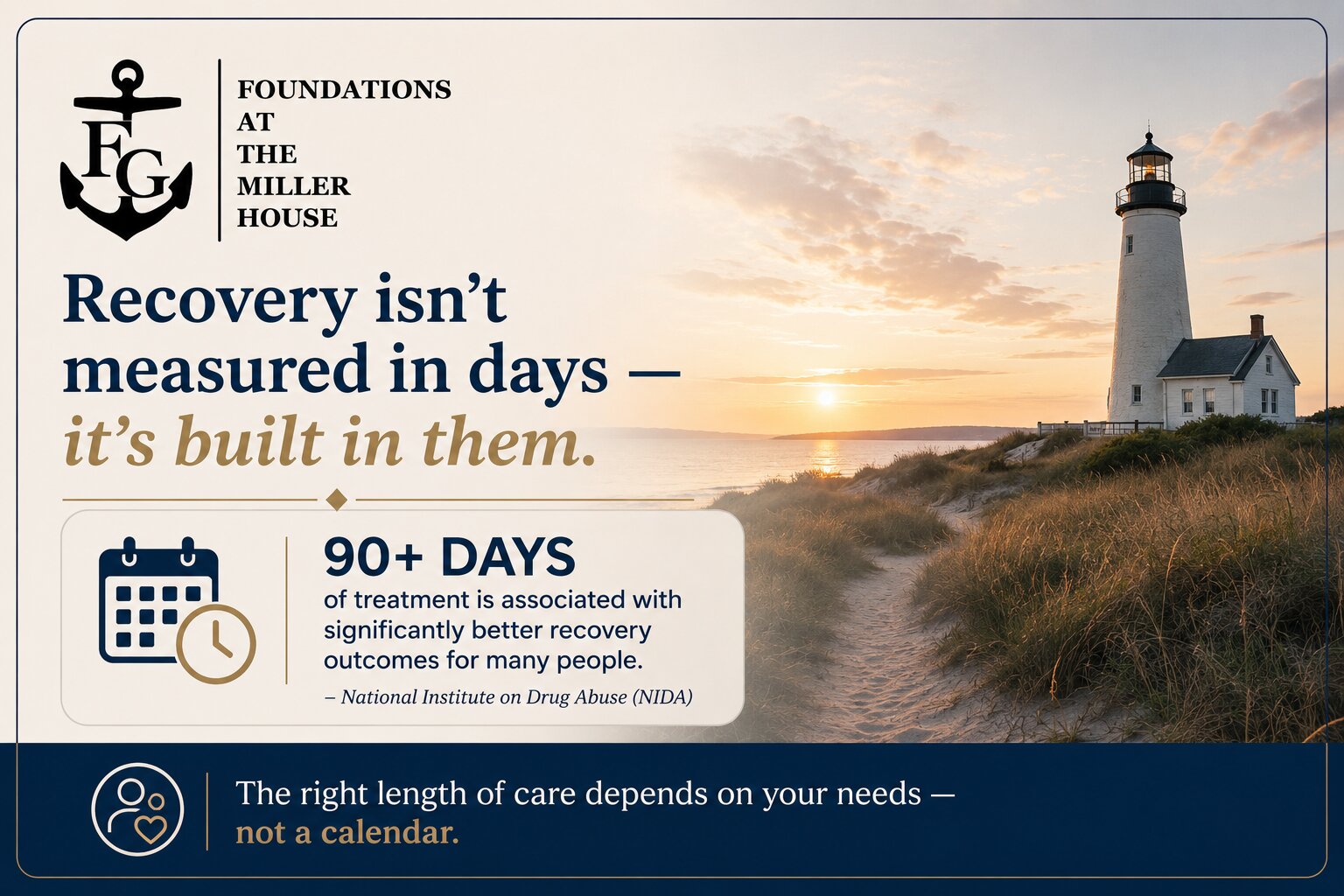
The National Institute on Drug Abuse (NIDA) has long reported that remaining in treatment for 90 days or longer is associated with significantly better outcomes for many individuals with substance use disorders because it provides enough time to develop new behaviors, address underlying issues, and build a recovery plan that extends beyond discharge.
That doesn’t mean everyone needs exactly 90 days.
It means that recovery often benefits from having enough time to:
- Establish healthy daily routines
- Practice recovery skills repeatedly
- Address trauma and mental health conditions
- Improve communication with family
- Build confidence before returning home
- Create realistic aftercare plans
For people with severe addiction, multiple prior relapses, polysubstance use, or complex mental health needs, a longer stay can provide the stability needed before returning to everyday life.
Rather than asking, “How quickly can treatment end?” clinicians often ask, “What gives this person the greatest chance of staying well after they leave?”
What Actually Determines Length of Stay
When families ask how long is rehab, they’re usually looking for a number.
Clinicians are looking at something different.
Treatment length is based on ongoing clinical assessment rather than a predetermined schedule.
Factors that commonly influence recommendations include:
Substance Being Used
Different substances affect recovery differently.
Someone recovering from alcohol may have different medical and psychological needs than someone recovering from opioids, stimulants, or multiple substances at once. Individuals needing alcohol addiction treatment in Falmouth MA may require additional time depending on withdrawal severity and long-term drinking patterns.
Length and Severity of Addiction
Someone who has been using for several months generally has different treatment needs than someone who has struggled with addiction for many years.
Long-term substance use often affects relationships, employment, physical health, and emotional regulation, all of which require time to address.
Previous Treatment History
If someone has completed treatment before but returned to substance use, a longer stay may allow clinicians to explore what contributed to relapse and strengthen future recovery strategies.
Mental Health Conditions
Many individuals entering treatment also experience:
- Depression
- Anxiety disorders
- PTSD
- Bipolar disorder
- Trauma-related symptoms
Treating both addiction and mental health together often requires additional time.
Progress During Treatment
Recovery isn’t linear.
Some people make rapid progress, while others need more time to develop coping skills, participate consistently in therapy, or prepare for returning home safely.
Treatment plans are regularly reviewed and adjusted based on that progress.
What Happens if Insurance Covers Less Time Than Recommended?
Insurance is an understandable concern for many families.
The good news is that many health insurance plans provide benefits for addiction treatment, but coverage varies based on:
- Medical necessity
- Individual policy benefits
- Clinical reviews
- In-network status
- Ongoing treatment progress
Insurance companies generally do not approve treatment simply because someone requests a specific number of days. Instead, they review clinical documentation showing why continued care remains medically appropriate.
Sometimes insurance approves the full recommended stay.
Sometimes additional days are authorized after clinical review.
Sometimes coverage ends before clinicians believe treatment should.
When that happens, treatment teams typically work with patients and families to identify the safest next step. That may include transitioning to outpatient treatment near Cape Cod while continuing therapy, medication management, recovery support, and relapse prevention planning.
The important point is that recovery doesn’t suddenly stop because insurance coverage changes. Good treatment includes planning for what comes next.
Recovery Continues Long After Treatment Ends
One of the biggest misconceptions about addiction treatment is that discharge means recovery is complete.
In reality, leaving a treatment program marks the beginning of applying new skills in everyday life.
Successful long-term recovery often includes:
- Individual counseling
- Outpatient treatment
- Peer support meetings
- Medication-assisted treatment when appropriate
- Family therapy
- Alumni programs
- Ongoing recovery coaching
- Healthy daily routines
Whether someone spends 30, 60, or 90 days in treatment, lasting recovery is built through continued support and consistent effort after returning home.
The question isn’t simply how long is rehab.
A better question is:
“What level of care gives this person the strongest chance to keep moving forward once treatment ends?”
Final Thoughts
Choosing addiction treatment can feel overwhelming, especially when you’re trying to balance hope, finances, family responsibilities, and uncertainty about what lies ahead.
The truth is that there isn’t a universally “correct” number of days. Some people make excellent progress in 30 days, while others benefit from 60 or 90 days of structured care. What matters most is receiving treatment that matches the individual’s clinical needs—not rushing to meet a calendar deadline.
If you’re trying to figure out how long rehab should be, the honest answer is: it depends on what you need. Our residential addiction treatment on Cape Cod team can walk you through the options and help you make the right call. Call us anytime.
Frequently Asked Questions
Is 30 days enough for addiction treatment?
For some people, yes. A 30-day program can provide medical stabilization, therapy, and the beginning of recovery. However, individuals with severe addiction, repeated relapses, or co-occurring mental health conditions often benefit from a longer length of stay followed by ongoing outpatient care.
Does staying in treatment longer improve success?
Research suggests that, for many people, longer participation in treatment is associated with better long-term outcomes. Spending more time in treatment allows individuals to build coping skills, address underlying issues, and develop stronger relapse prevention strategies before returning home.
Can someone leave treatment before completing the recommended length?
Yes. Adults generally have the right to leave treatment unless specific legal or medical circumstances apply. However, leaving before completing the recommended plan may increase the risk of relapse because important therapeutic work and discharge planning may still be incomplete. Families are encouraged to discuss concerns with the treatment team before making that decision.