

There’s a certain kind of exhaustion that comes with severe depression that people don’t always see from the outside.
You can still answer emails. You can still smile at dinner. You can still tell people you’re “just tired.” Meanwhile, inside, everything feels muted. Heavy. Distant.
A lot of people spend months — sometimes years — trying to convince themselves they should be able to handle it alone. That if they just rest more, push harder, change routines, or “get it together,” things will click back into place.
But severe depression has a way of shrinking your world slowly. Quietly.
And eventually, many people find themselves asking a question they never thought they’d need to ask: What kind of support actually helps when things feel this bad?
If you’ve been comparing options or trying to understand what level of care makes sense, exploring residential treatment program services can be one step toward clarity — not because you’ve failed, but because carrying this alone may no longer be working.
Severe Depression Can Make You Doubt Your Own Reality
One of the hardest parts about depression is that it often argues with you while you’re experiencing it.
It tells you you’re lazy instead of exhausted. Weak instead of overwhelmed. Dramatic instead of struggling.
That internal voice can make it incredibly difficult to know whether you truly need help or whether you’re somehow overreacting.
A lot of people wait until they’re in full crisis before seeking a higher level of support because they assume they need to “earn” care by getting worse first.
But severe depression doesn’t always look like a dramatic breakdown.
Sometimes it looks like:
- Sleeping all day but never feeling rested
- Losing interest in people you genuinely love
- Feeling emotionally numb for months at a time
- Avoiding basic tasks because everything feels too heavy
- Struggling to stay safe alone with your thoughts
- Feeling disconnected from your own life
People often minimize these experiences because they’ve become used to surviving in them.
That survival mode can last a long time.
Why Weekly Therapy Sometimes Stops Feeling Like Enough
Outpatient care helps many people. For some, weekly therapy or structured daytime support creates enough stability to improve symptoms while allowing them to stay connected to daily life.
But severe depression can sometimes outgrow the amount of support outpatient care realistically provides.
That’s not criticism. It’s just reality.
If someone spends one hour in therapy but the other 167 hours of the week are filled with isolation, emotional spiraling, disrupted sleep, hopelessness, or unsafe thoughts, recovery can start feeling impossible to hold onto between appointments.
This is often where people begin considering more immersive support options.
Not because they’re “crazy.”
Not because they’re broken.
Because they’re exhausted.
The conversation around inpatient vs outpatient mental health often becomes overly clinical online, but for real people, the decision usually feels deeply emotional. It’s about trying to figure out how much support is needed to finally breathe again.
Structure Can Feel Uncomfortable — Until It Starts Helping
A lot of people resist live-in treatment because they imagine losing freedom or independence.
And honestly, that fear makes sense.
Depression already makes people feel disconnected from themselves. The idea of stepping away from home, routines, or responsibilities can feel frightening at first.
But many people describe something surprising after entering a more structured environment:
Relief.
Not instant happiness. Not a magical cure. Just relief from having to fight every single moment alone.
Meals happen consistently. Sleep schedules stabilize. Support exists throughout the day instead of only during scheduled appointments. Someone notices if you withdraw completely instead of disappearing silently for weeks.
That level of consistency matters more than people realize.
Severe depression thrives in isolation and unpredictability. Structure interrupts both.
Sometimes healing starts with very basic things:
- Regular sleep
- Consistent meals
- Reduced outside stress
- Being around other people
- Having support available before things spiral
Those things can sound simple until depression makes them nearly impossible alone.
Outpatient Support Isn’t “Less Serious”
There’s a dangerous mindset people fall into sometimes where they view outpatient care as “not enough” or residential care as “the only real treatment.”
Neither idea is true.
Different people need different levels of care at different moments in life.
Some people benefit enormously from multi-day weekly treatment while continuing to live at home. Others need temporary separation from outside stressors to stabilize safely.
And many people move between levels of care over time.
Someone may begin with more intensive support and later transition into outpatient treatment as they regain stability. Another person may start outpatient care and later realize they need more structure after symptoms worsen.
That flexibility matters.
Mental health recovery isn’t linear. It’s responsive.
The goal isn’t choosing the “strongest” option. The goal is choosing the level of support most likely to help you reconnect with yourself.
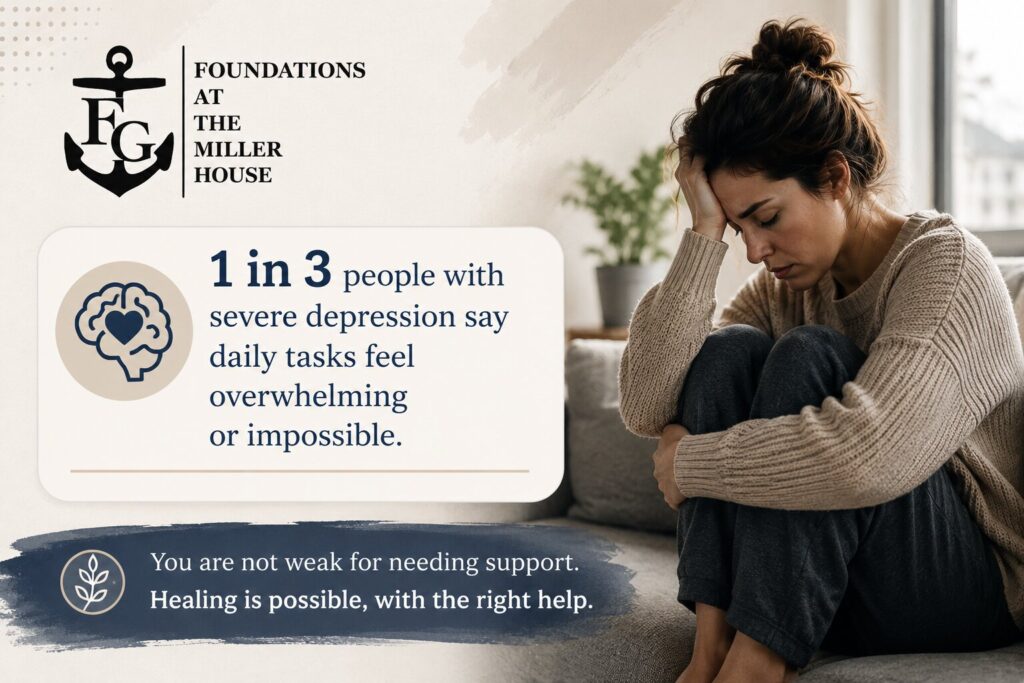
Depression Has a Way of Making Small Tasks Feel Massive
People who haven’t experienced severe depression often underestimate how physically exhausting it can feel.
Everything becomes heavier.
Answering texts. Folding laundry. Returning calls. Taking a shower. Going to work and pretending you’re okay for eight hours straight.
There’s a specific kind of loneliness that comes from functioning outwardly while quietly falling apart inside.
And over time, many people become incredibly skilled at hiding how bad things actually are.
That’s why loved ones are sometimes shocked when someone finally admits they need help.
But the person struggling usually isn’t shocked at all.
They’ve been carrying it silently for months.
Maybe longer.
One person once described severe depression to me like trying to walk through waist-deep water while everyone else moved normally around them. That image stays with me because it explains something important:
You can technically still move forward while struggling immensely.
But eventually, exhaustion catches up.
Sometimes “Pushing Through” Stops Working
There’s a point where determination alone may not be enough anymore.
That realization can feel deeply uncomfortable, especially for people who pride themselves on being independent or resilient.
A lot of long-term survivors of depression become experts at enduring discomfort. They know how to keep functioning just enough to avoid concern from others.
But survival mode has a cost.
Over time, emotional numbness can replace connection. Isolation grows. Joy disappears quietly. Relationships begin feeling distant. Even rest stops feeling restorative.
And because it happens gradually, people often don’t realize how disconnected they’ve become until they’re completely drained.
This is one reason more immersive care can sometimes help people who haven’t responded to lower levels of support. It creates space to stop performing wellness long enough to actually receive help.
That pause matters.
Because healing often requires more than insight. It requires support repeated consistently enough for the nervous system to finally unclench.
The Best Choice Is the One That Helps You Stay Safe and Present
There isn’t a universal answer to whether inpatient or outpatient care “works better” for severe depression.
The better question is:
What environment gives you the highest chance of stabilizing, reconnecting, and staying safe right now?
For some people, that’s continuing daily life while receiving structured outpatient care.
For others, the weight of depression has become too consuming to manage without round-the-clock support and a temporary separation from outside pressures.
Neither choice says anything about your worth.
Needing more support doesn’t mean you failed at coping. Sometimes it simply means your mind and body have been carrying too much for too long.
And honestly, there’s no trophy for waiting until you completely collapse before asking for help.
FAQ: Severe Depression and Treatment Options
How do I know if outpatient treatment is enough?
Outpatient care may work well if you’re still able to stay relatively safe, maintain some daily structure, and consistently participate in treatment outside appointments. If symptoms are becoming unmanageable between sessions, more support may be worth exploring.
Does residential treatment mean my depression is “severe”?
Not necessarily. Some people enter live-in treatment because their symptoms are worsening, while others choose it because they need distance from stress, isolation, or unhealthy environments. Treatment level is about support needs, not personal failure.
Can I start with outpatient care first?
Absolutely. Many people begin with outpatient support and adjust over time depending on how they respond. Mental health treatment is flexible, and care plans can evolve as needs change.
Is it normal to feel scared about getting more help?
Very normal.
A lot of people fear losing independence, disrupting routines, or being judged. But fear doesn’t automatically mean you’re making the wrong decision. Sometimes it simply means the decision matters deeply to you.
What if I’ve tried treatment before and it didn’t help?
That experience is more common than people realize.
Different treatment environments, therapy approaches, support systems, and timing can all affect recovery differently. One disappointing experience doesn’t mean healing is impossible.
Can depression really become physically exhausting?
Yes. Severe depression often affects sleep, appetite, concentration, energy levels, and nervous system regulation. Many people describe feeling physically weighed down, even during simple daily tasks.
What’s the biggest difference between outpatient and residential care?
The biggest difference is usually the level of daily support and structure. Outpatient care allows people to continue living at home, while residential treatment provides a more immersive environment with ongoing support throughout the day.
You do not have to keep white-knuckling your way through severe depression alone. Call (774) 252-6966 or explore our residential treatment program services to learn more about our residential treatment program services in Falmouth, MA.