

There is a moment many parents describe in almost identical words.
Your child tried therapy. Maybe they attended weekly counseling or a structured daytime program. For a while, things looked hopeful. They seemed calmer. More engaged. You allowed yourself to believe the worst might be behind them.
Then slowly—sometimes quietly—things started slipping again.
If you’re here, you may be asking the painful question many parents ask: Why isn’t this helping enough?
As clinicians, we see how deeply parents care about their children. We also see how confusing it can feel when the support that once seemed promising stops creating lasting change. Many families begin exploring options like live-in treatment support when they realize their child may need a more immersive environment to stabilize and rebuild their life.
And understanding why outpatient care sometimes reaches its limits can help parents move from fear to clarity.
The Subtle Signs Parents Usually Notice First
Parents are often the first to recognize that something isn’t improving the way everyone hoped.
At first, outpatient therapy might bring small positive shifts. Your child may start attending sessions, talking about coping strategies, or making efforts to rebuild routines.
But after a while, familiar patterns may return.
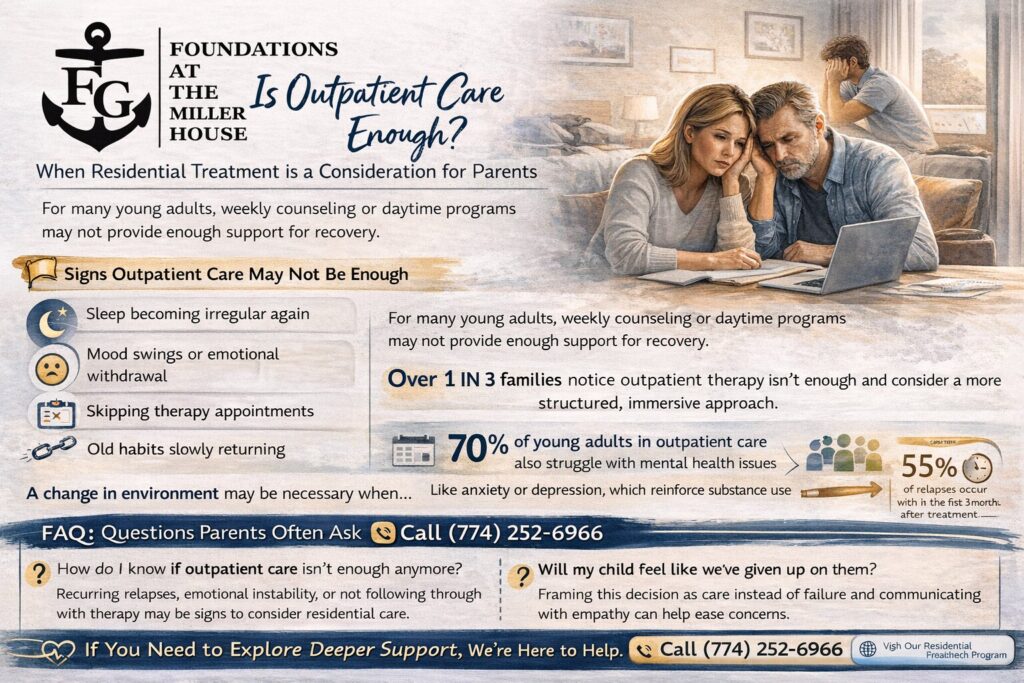
You might notice things like:
- Sleep becoming irregular again
- Increased irritability or emotional withdrawal
- Missing appointments or avoiding conversations
- Old habits quietly resurfacing
Many parents describe the experience as feeling like progress is slipping through their hands.
It’s exhausting to watch, and it can leave families wondering whether they somehow made the wrong decisions.
But what many parents don’t realize is that outpatient care simply isn’t the right level of support for everyone—especially when addiction or mental health challenges are deeply rooted.
Why Weekly Therapy Sometimes Can’t Compete With Daily Life
Traditional outpatient therapy usually involves one or two sessions per week.
For some people, that structure works well. It gives them space to process challenges while continuing to live their normal lives.
But young adults struggling with addiction often face an environment that makes recovery extremely difficult.
They return home after therapy to the same stressors:
- Social circles where substance use is normalized
- Academic or work pressure
- Relationship conflicts
- Emotional triggers they haven’t yet learned to manage
A single hour of therapy can’t always compete with six days of real-world stress.
Imagine trying to repair a leaking roof while it’s still raining every day. The effort matters—but the environment keeps working against it.
For some individuals, deeper recovery requires stepping into a space where healing is supported consistently, not just occasionally.
Why Environment Can Change Everything
One of the biggest factors clinicians consider when recommending more structured care is environment.
Young adults often remain surrounded by the same people, places, and routines where substance use developed. Even when they genuinely want to change, those surroundings can pull them back into familiar patterns.
Recovery becomes much harder when every day includes the same triggers.
Structured recovery environments remove many of those pressures temporarily.
Instead of constantly fighting temptation, the person can focus on building stability. Sleep improves. Daily routines become predictable. Emotional work becomes easier because the surrounding environment supports healing instead of disrupting it.
For many individuals, this shift alone can create the first real sense of progress.
When Addiction and Mental Health Begin Reinforcing Each Other
Another reason clinicians sometimes recommend deeper support is the complex relationship between emotional health and substance use.
Many young adults don’t just struggle with substances alone.
They may also be coping with:
- Anxiety
- Depression
- Trauma
- Identity or life-direction struggles
When emotional pain and substance use collide, each one can intensify the other.
Substances may initially numb difficult feelings, but they often worsen them over time. Meanwhile, worsening mental health can increase the urge to use again.
Breaking that cycle often requires consistent support, structured routines, and time for deeper emotional work.
Without that stability, it can be difficult for meaningful change to take hold.
What Parents Often Misunderstand About Escalating Care
When clinicians recommend a higher level of support, many parents feel a wave of fear.
They worry it means things are far worse than they realized. Some feel guilty, wondering if they should have done something differently earlier.
But escalating care isn’t about punishment or failure.
It’s about matching the level of care to the level of need.
Think about physical health. A mild injury might require rest and physical therapy. But a serious fracture needs stronger protection and more intensive treatment to heal correctly.
Addiction and mental health follow similar patterns.
In some situations, clinicians may recommend a residential treatment program because consistent, round-the-clock support allows individuals to stabilize in ways outpatient care cannot provide.
A Story That Many Families Recognize
One family recently shared an experience that mirrors what many parents go through.
Their 20-year-old daughter had been attending outpatient therapy for months. At first, she seemed hopeful and motivated.
But eventually the same patterns returned—late nights, missed classes, increasing isolation.
Her parents felt helpless.
They worried about pushing too hard. They feared making the wrong decision.
After speaking with clinicians, the family decided to try a more structured recovery environment.
Within weeks, something shifted.
Without the daily chaos and pressure of her previous routine, she began sleeping regularly again. Her mood stabilized. She started opening up about emotions she had been avoiding for years.
Months later, her father said something many clinicians hear often:
“For the first time, it felt like our daughter had space to breathe again.”
Stories like this are not rare.
They are reminders that the right environment can unlock progress that once felt impossible.
Why Young Adults Often Need Structure to Rebuild Stability
Young adulthood is already a challenging stage of life.
People in their late teens and early twenties are navigating independence, relationships, identity, and long-term goals all at once.
When addiction enters that stage, everything becomes more complicated.
Many young adults benefit from environments where support exists daily—not just once a week.
Structure helps regulate sleep patterns, improve emotional balance, and create consistent routines. Peer support helps reduce feelings of isolation. Professional guidance helps individuals understand patterns they may never have recognized on their own.
That combination often becomes the foundation for long-term recovery.
For Many Parents, This Is the Hardest Decision
Considering deeper treatment options for your child can feel overwhelming.
Parents often wrestle with difficult questions:
Am I overreacting?
Am I giving up on them too soon?
Will they feel abandoned if I support this step?
These fears are natural.
But seeking more support for your child isn’t giving up on them.
It’s often the opposite.
It means you’re willing to look beyond short-term discomfort in order to give them the best possible chance at a healthier future.
And for many families, that decision becomes a turning point in the recovery journey.
FAQ: Questions Parents Often Ask
How do I know if outpatient care isn’t enough anymore?
Parents often notice recurring patterns—relapse, emotional instability, or difficulty maintaining routines—despite consistent therapy. These signs may indicate that a more structured environment could be helpful.
Does needing deeper treatment mean my child has hit rock bottom?
No. Many families seek additional support specifically to prevent situations from becoming more severe. Early intervention can significantly improve recovery outcomes.
Will my child feel like we’re giving up on them?
Most young adults initially feel uncertain, but many later express gratitude for the opportunity to focus on recovery in a supportive environment. Framing the decision as an act of care rather than punishment can make a difference.
How long does recovery usually take?
Recovery timelines vary for every individual. What matters most is creating an environment where healing can begin and progress can be sustained over time.
Can people really recover from addiction at this age?
Yes. Young adults often respond extremely well to treatment because their lives and identities are still developing. With the right support, many go on to build healthy, meaningful futures.
What should parents do if they feel unsure about the next step?
Talking with experienced clinicians can help clarify options. Even one conversation can provide insight into what level of support may be most helpful.
If you’re beginning to wonder whether your child needs more structured support than outpatient care can provide, you don’t have to navigate that decision alone. Call (774) 252-6966 or visit our residential treatment program services to learn more about the options available for your family.