

If you’re considering treatment for depression or anxiety, there’s a good chance you’ve already asked yourself a dozen questions.
Will it help?
What will it be like?
Will I have to leave work?
And perhaps the most common question of all:
How long will I be there?
For many people, the idea of entering a live-in treatment program feels overwhelming. You may be managing responsibilities at home, trying to keep up appearances at work, or simply worried about stepping away from your everyday life.
The uncertainty can make it tempting to delay getting help.
At Foundations Group Miller House, we often speak with people who are less worried about treatment itself and more worried about not knowing what to expect. That’s why understanding the timeline can be helpful. While every person’s experience is different, there are common factors that influence how long someone stays and what happens during that time.
If you’re exploring options for live-in mental health care, here’s what you should know.
Recovery Doesn’t Follow a Schedule
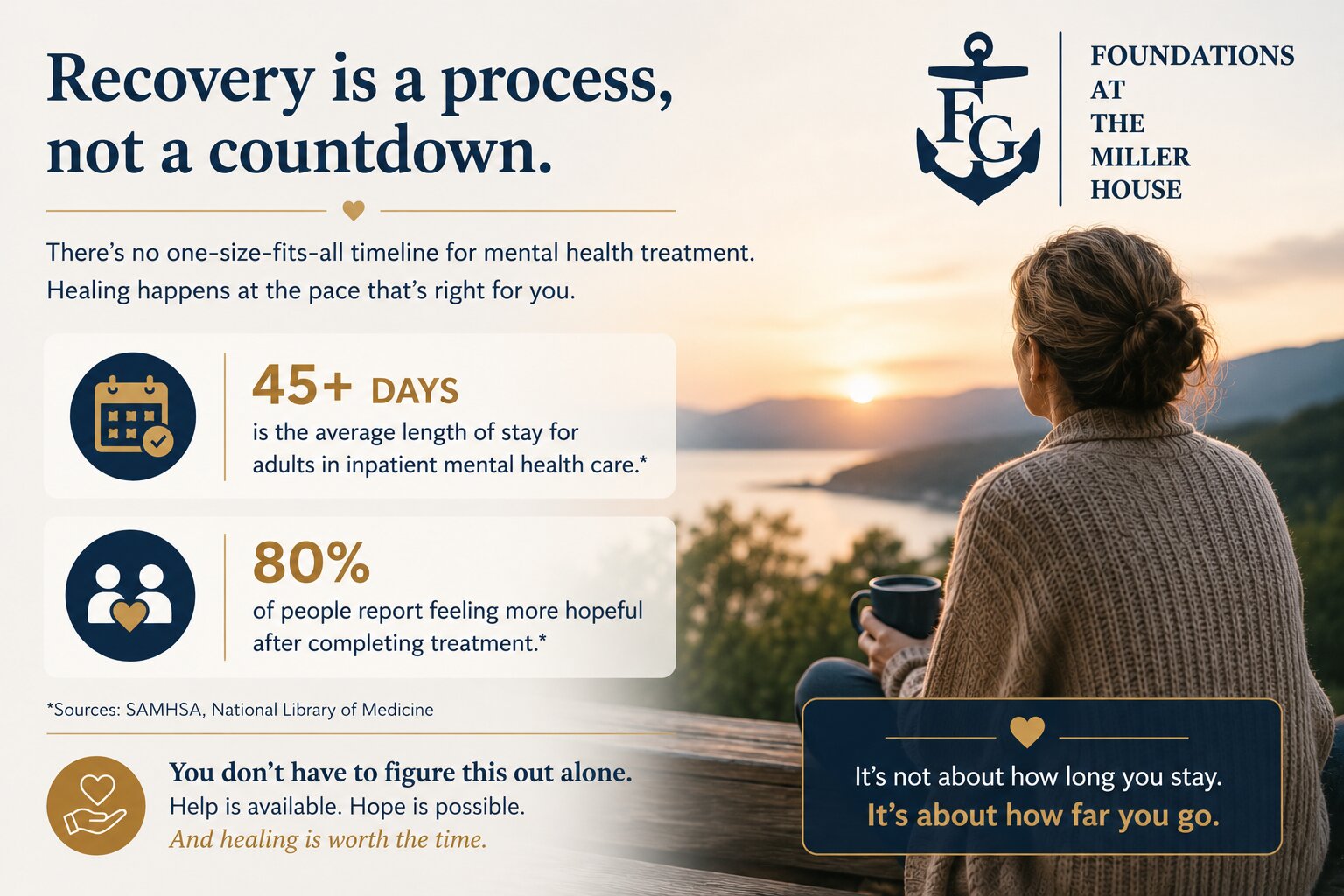
One of the biggest misconceptions about treatment is that there is a magic number.
People often want someone to tell them exactly how many days they’ll need before they feel better.
Mental health recovery rarely works that way.
Depression and anxiety affect every person differently. Two people can receive the same diagnosis and have completely different experiences. One person may be struggling with overwhelming panic attacks that began a few months ago. Another may have spent years quietly battling depression while continuing to show up for work, family obligations, and daily life.
The purpose of treatment isn’t to reach a specific number of days. It’s to help someone reach a level of stability, safety, and confidence that allows them to continue their recovery outside of a structured setting.
That means treatment plans are individualized rather than based on a fixed timeline.
Why Some People Stay Longer Than Others
Several factors can influence how long treatment lasts.
The severity of symptoms is often one of the biggest considerations. Someone experiencing suicidal thoughts, severe depression, debilitating anxiety, or significant functional impairment may need more time and support than someone seeking help earlier in the process.
Other factors include:
- Previous treatment experiences
- Co-occurring mental health conditions
- Stressors at home or work
- Medication needs and adjustments
- Available support systems
- Overall emotional and psychological stability
A person who has supportive family members, established coping skills, and a strong outpatient care plan may be ready to transition sooner than someone who is returning to an environment filled with stress, conflict, or isolation.
There is no “right” timeline.
The right timeline is the one that gives you the best opportunity for lasting progress.
The First Few Days Are Usually Different Than People Expect
Many people arrive believing they will immediately begin intensive therapy sessions every hour of the day.
In reality, the first stage of treatment often focuses on assessment and stabilization.
Depression and anxiety can leave people emotionally exhausted. Some arrive after months of sleepless nights. Others have been carrying constant worry, panic, hopelessness, or emotional numbness for so long that they barely remember what calm feels like.
The early days are designed to help people slow down.
During this phase, treatment teams typically focus on:
- Comprehensive mental health assessments
- Psychiatric evaluations
- Medication review and management
- Safety planning
- Establishing healthy routines
- Building trust with the treatment team
Many people report feeling relief during this stage. Not because their symptoms disappear overnight, but because they are finally in an environment where they don’t have to carry everything alone.
It’s often the first deep breath they’ve taken in a long time.
Real Change Takes More Than Insight
People sometimes assume that understanding their anxiety or depression is enough to overcome it.
Unfortunately, awareness is only the beginning.
Someone may understand exactly why they become anxious in social situations and still experience overwhelming panic. A person may know the symptoms of depression inside and out while still struggling to get out of bed each morning.
Treatment focuses on more than education.
It creates opportunities to practice new ways of responding.
That might include:
- Learning emotional regulation skills
- Identifying unhealthy thought patterns
- Developing healthier coping strategies
- Practicing communication skills
- Building daily structure
- Addressing underlying emotional wounds
These skills require repetition.
Imagine learning to play an instrument. Reading about music is helpful, but real growth comes from practice. Mental health recovery works in a similar way.
The goal isn’t simply understanding your challenges. The goal is building confidence in your ability to navigate them.
Progress Often Happens in Small Moments
One reason treatment can feel confusing is that progress doesn’t always arrive in dramatic breakthroughs.
Sometimes recovery looks surprisingly ordinary.
It’s getting a full night’s sleep after weeks of insomnia.
It’s eating a meal without feeling overwhelmed.
It’s making eye contact during a group discussion.
It’s noticing that a difficult thought no longer controls your entire day.
These moments can seem small from the outside. Inside treatment, they’re often meaningful signs that healing is happening.
Think of recovery like watching a sunrise.
If you stare at the horizon for one minute, it may seem like nothing is changing. But over time, the darkness gradually gives way to light.
Mental health recovery often unfolds in the same way.
Leaving Treatment Is a Transition, Not an Ending
Many people worry that treatment will end abruptly.
In reality, effective care includes planning for what comes next.
The goal is not simply helping someone feel better inside treatment. The goal is helping them maintain progress after treatment ends.
Depending on individual needs, aftercare may include:
- Individual therapy
- Medication management
- Support groups
- Structured daytime care
- Multi-day weekly treatment
- Family involvement and support
A strong discharge plan can make a significant difference in long-term outcomes.
This is also why discussions about inpatient mental health length of stay only tell part of the story. The amount of time spent in treatment matters, but what happens before, during, and after treatment often matters even more.
How to Know If You’re Ready for More Support
Many people delay treatment because they believe they should be able to manage things on their own.
Depression and anxiety can make asking for help feel like failure.
It’s not.
You may benefit from a higher level of support if:
- Symptoms are interfering with daily life
- Anxiety or depression feels overwhelming
- Outpatient therapy hasn’t been enough
- You’re struggling to function at work, school, or home
- You’re withdrawing from people you care about
- You’re experiencing thoughts of self-harm or hopelessness
Seeking treatment isn’t giving up.
It’s making a decision to stop carrying everything by yourself.
The Question Behind the Question
When people ask how long treatment lasts, they’re often asking something deeper.
They’re asking:
“How long until I feel like myself again?”
That’s a completely understandable question.
The answer varies from person to person. But many people discover that recovery isn’t about becoming who they were before depression or anxiety took hold.
It’s about building a healthier, stronger version of themselves moving forward.
And that process deserves enough time to take root.
Frequently Asked Questions
How long do most people stay in treatment for depression and anxiety?
The length of treatment varies depending on symptom severity, personal goals, and clinical recommendations. Some individuals need a shorter period focused on stabilization, while others benefit from a longer stay that allows for deeper therapeutic work and skill development.
Can I leave treatment earlier than planned?
Treatment is voluntary in many situations, but it’s important to discuss any concerns with your care team. They can help you understand the benefits and risks of leaving before recommended goals have been achieved.
Will I be able to talk to my family during treatment?
Most programs allow communication with loved ones, although specific policies vary. Family involvement is often encouraged because a strong support system can play an important role in recovery.
What if I’ve already tried therapy before?
Many people who enter live-in treatment have previously participated in outpatient therapy. A more structured environment can provide additional support, consistency, and resources that may not have been available in weekly sessions alone.
Does treatment focus on anxiety and depression at the same time?
Yes. Depression and anxiety frequently occur together. Treatment plans are designed to address the full picture of a person’s mental health rather than focusing on only one diagnosis.
What happens after I complete treatment?
Most people continue care through outpatient therapy, psychiatric services, support groups, or other recommended services. Recovery is an ongoing process, and continuing support can help maintain the progress made during treatment.
Depression and anxiety can make the future feel smaller than it really is. Treatment creates space to breathe, heal, and begin building a life that feels manageable again.
Call (774) 252-6966 or visit our residential treatment program services to learn more about our residential treatment program services.