

The day I left treatment, I felt something I hadn’t felt in a long time.
Hope.
Not the shaky kind. The real kind. The kind that makes you believe life might actually work again. I had routines, coping tools, and people who believed in me. Walking out those doors felt like stepping back into the world with a new version of myself.
And for a while, things really were better.
But here’s the part I didn’t understand yet: recovery outside of treatment moves differently than recovery inside it.
The environment that helped stabilize me—the structure, the accountability, the support—was suddenly gone. Life picked up its normal speed again, and I had to figure out how to keep moving forward without the guardrails that had protected me.
Places built for healing, like live-in treatment support, give you the chance to reset. But the real test often begins once you return to everyday life.
What follows are some of the lessons I learned the hard way.
Not as warnings—but as things I wish someone had whispered to me before I left.
I Thought Finishing Treatment Meant I Was Fixed
When I completed treatment, I carried a quiet belief: I’ve solved the problem.
I had worked through painful memories. I had learned coping strategies. I had listened to other people’s stories and shared parts of my own.
So it felt logical to assume the hard part was over.
But recovery doesn’t work like a finish line.
Treatment gives you tools, awareness, and stability. What it doesn’t do is eliminate life’s challenges. Stress still shows up. Emotions still shift. Old habits still wait patiently in the background.
Recovery after treatment is less about “being fixed” and more about continuing the work you started.
And that took me a while to understand.
The Real World Moves Faster Than Healing Does
Inside treatment, time slows down.
Your day has rhythm. Therapy sessions help you unpack emotions. Group conversations remind you that you’re not alone.
Outside, life moves quickly again.
Emails. Bills. Family dynamics. Social pressure. Work stress.
It felt like stepping out of a quiet training environment and straight into a crowded highway.
Suddenly, I was juggling responsibilities while trying to protect a version of myself that was still fragile.
That tension surprised me.
Because recovery doesn’t unfold at the same pace as everyday life. Healing is slower. It needs patience, structure, and support to keep growing.
The Voice That Told Me “You’re Fine Now”
At first, I stayed committed to the habits I learned in treatment.
But over time, a familiar voice returned.
It didn’t sound reckless. It sounded logical.
You’re doing better now.
You don’t need that much support anymore.
Other people struggle more than you do.
At first, it felt harmless.
Then slowly, I began cutting corners.
I skipped support meetings. I stopped reaching out when I felt overwhelmed. I told myself I could manage things alone.
What I didn’t realize was that the same mindset that once kept me stuck was quietly returning.
Recovery doesn’t collapse overnight.
It erodes in small decisions.
Structure Was Doing More Work Than I Realized
While I was in treatment, I sometimes felt frustrated with the routine.
Wake up early. Attend group sessions. Follow schedules.
At the time, it felt restrictive.
After leaving, I realized something important: that structure had been protecting me.
Routine stabilizes the nervous system. It creates predictable rhythms for sleep, stress management, and emotional processing.
Without it, things can drift.
Late nights become common. Meals become irregular. Emotional overwhelm creeps in quietly.
Structure isn’t about controlling your life.
It’s about creating enough stability for healing to continue.
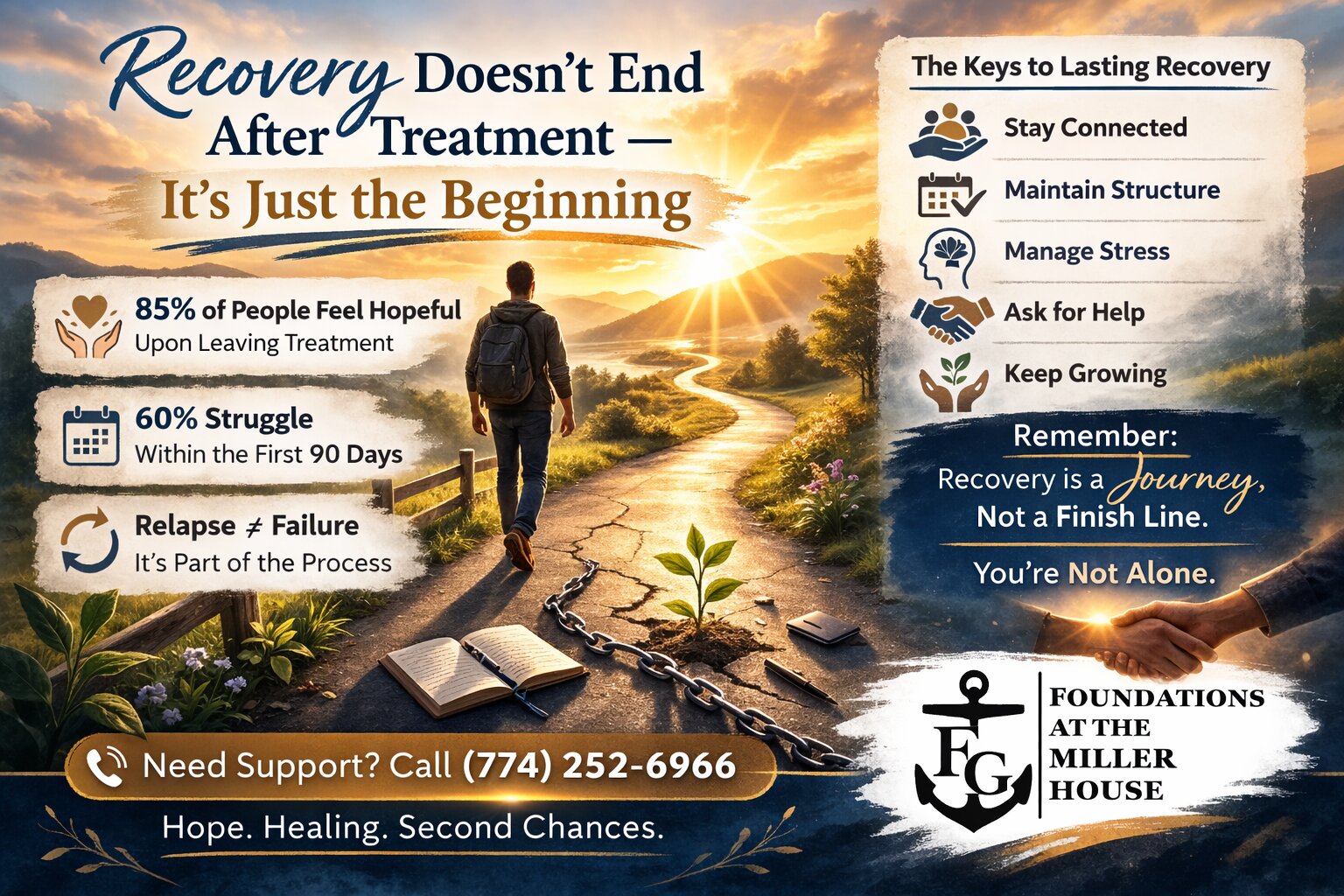
Isolation Is the First Warning Sign
The relapse that eventually happened in my life didn’t start with substance use.
It started with distance.
I stopped answering calls from people who supported me. I told myself I was too busy to check in with my therapist. I avoided conversations about how I was really feeling.
Isolation can feel harmless at first.
Sometimes it even feels comfortable.
But recovery thrives on connection.
When that connection fades, the protective network around your recovery starts thinning. And when that happens, it becomes easier for old patterns to slip back in.
That’s a lesson many alumni learn only after experiencing it themselves.
The Shame of Needing Help Again
The hardest moment in my recovery wasn’t relapse.
It was admitting I needed help again.
I felt embarrassed. I believed I had wasted the opportunity treatment gave me. I imagined people thinking I hadn’t tried hard enough.
But something surprising happened when I finally reached out.
The people who supported my recovery didn’t treat it like failure.
They treated it like continuation.
Recovery isn’t about never falling. It’s about continuing to stand back up.
For some alumni, reconnecting with support can mean therapy, structured outpatient care, or even returning to a residential treatment program when stability needs to be rebuilt.
And sometimes that second chapter becomes the one where everything finally starts to click.
The Truth I Wish I Understood Earlier
If I could go back and talk to the version of myself leaving treatment, I would say this:
You’re not done.
And that’s not a bad thing.
Recovery isn’t a one-time event. It’s an ongoing relationship with yourself. It requires honesty, community, and the willingness to ask for help more than once.
Most importantly, it requires patience.
The version of you that left treatment isn’t the finished product.
It’s the beginning of a life that’s still unfolding.
What Help Can Look Like After Treatment
Many alumni eventually realize that staying connected to support is one of the most important parts of recovery.
That support might include:
- Continuing therapy
- Participating in peer recovery groups
- Maintaining daily routines that support emotional stability
- Staying connected to recovery communities
- Reaching out early when challenges return
Recovery becomes stronger when it remains connected to people and environments that reinforce growth.
No one is meant to navigate it alone.
FAQ: Questions Many Alumni Ask After Leaving Treatment
Is it normal to feel confident right after leaving treatment?
Yes. Many people feel hopeful and motivated when they leave treatment. That optimism is healthy, but maintaining recovery usually requires ongoing support and structure.
Why do things sometimes feel harder after returning home?
Daily life includes stress, responsibilities, and triggers that may not exist in treatment environments. Adjusting to that transition can take time.
Does relapse mean everything I learned in treatment is lost?
Not at all. The insights, coping skills, and emotional awareness gained during treatment remain valuable and can still guide future recovery efforts.
Why is staying connected to support so important?
Recovery thrives on accountability and connection. Regular communication with supportive people helps maintain awareness and stability.
Should someone consider returning to treatment if things start slipping?
In some situations, reconnecting with a structured environment can help individuals regain stability and strengthen their recovery foundation.
Can recovery still succeed after relapse?
Yes. Many individuals experience setbacks before achieving long-term stability. Continuing to seek support often leads to stronger, more sustainable recovery.
If you’re noticing old patterns returning—or simply want to strengthen your recovery—you don’t have to face that alone. Call (774) 252-6966 or visit our residential treatment program services to explore support that can help you move forward.