

I remember the moment I realized my first round of treatment hadn’t solved everything.
It wasn’t dramatic. No big crash or crisis. Just a quiet thought sitting in the back of my mind: Why does this still feel so hard?
If you’ve been out of treatment for a while and things have started slipping again, that realization can feel heavy. Many alumni eventually find themselves searching again for something like residential treatment—not because they failed, but because healing sometimes happens in layers.
And needing another layer of support doesn’t erase the progress you’ve already made.
The Lie That One Round Should Be Enough
A lot of us leave treatment believing the hardest part is behind us.
You complete the program. You go home. You start rebuilding your life piece by piece. Maybe you reconnect with people, return to work, or rebuild routines that felt impossible before.
But the idea that treatment should work perfectly the first time creates a quiet kind of pressure.
If things get difficult again, it’s easy to assume something is wrong with you.
The truth is much simpler: mental health recovery rarely moves in a straight line. Many people need multiple rounds of deeper support at different stages of their life. New stress, unresolved trauma, or life changes can uncover challenges that weren’t fully visible before.
And that doesn’t mean the first round didn’t work. It means it helped you get far enough to see the next step.
What Changes After You’ve Been Through It Once
Coming back for another stay in structured care isn’t the same as starting from scratch.
The first time many people enter treatment, everything feels unfamiliar. You’re learning new language around mental health. You’re sitting in therapy sessions wondering if you’re doing it right. You’re trying to understand emotions you may have pushed away for years.
The second time often feels different.
You recognize patterns sooner. You understand the purpose behind structure and daily routines. Group conversations that once felt uncomfortable start to make more sense.
Most importantly, you begin to see your own story with more clarity.
Instead of feeling like a beginner, returning alumni often notice that things begin to connect in ways they didn’t before. Insights land deeper. Coping skills become more practical. Emotional awareness becomes sharper.
It’s less about learning from zero—and more about strengthening what you already started.
Why the Months After Treatment Can Feel So Fragile
Many people assume the hardest part of recovery happens inside treatment.
But the months after leaving structured care can be surprisingly vulnerable.
In treatment, your day has a rhythm. Therapy sessions happen regularly. Meals are consistent. Sleep patterns stabilize. Support is always nearby.
Then suddenly you return to daily life.
Work expectations return. Relationships demand attention. Stress builds again. The outside world doesn’t slow down just because you’re trying to stay steady.
Around this time, many alumni notice subtle warning signs:
- Sleep becomes inconsistent
- Emotional reactions feel stronger
- Motivation starts fading
- Old coping habits quietly reappear
For some people, this is the moment they start searching phrases like inpatient mental health near me, trying to understand what kind of support might help them regain stability.
That search isn’t a sign of weakness. It’s often the moment someone chooses to intervene before things spiral further.
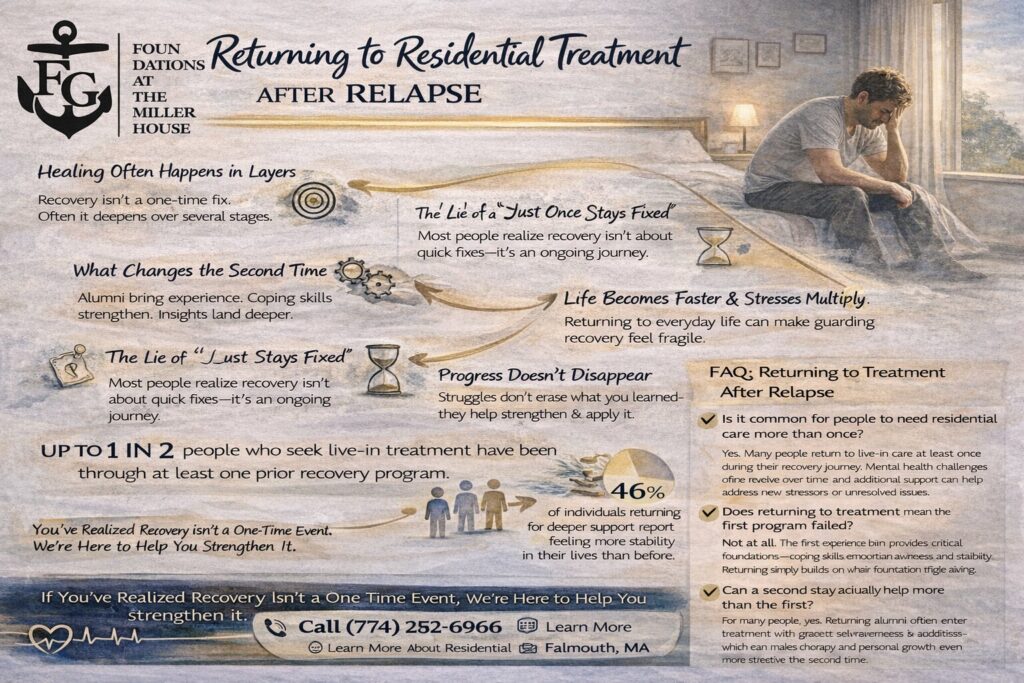
Relapse Doesn’t Erase What You Learned
One of the hardest thoughts after slipping backward is the feeling that everything you accomplished has been undone.
But progress in recovery doesn’t disappear just because things became difficult again.
Think about it this way: if you learned how to swim and later struggled in rough water, you wouldn’t say you forgot how to swim entirely. You’d recognize that the conditions changed.
Mental health works the same way.
The coping skills you practiced still exist. The self-awareness you gained is still there. The time you spent healing still shaped you.
Even relapse itself can reveal important information—about stress, environment, relationships, or emotional triggers that still need attention.
Sometimes another round of support simply helps you apply those lessons more deeply.
Why Live-In Support Can Reset Your Nervous System
Modern life is noisy.
Phones constantly buzz. Responsibilities stack up. There’s always another demand waiting for your attention.
Trying to rebuild mental stability while juggling all of that can feel exhausting.
That’s one reason structured live-in care can be so powerful. It removes much of that outside noise for a while.
Instead of fighting to manage everything at once, you’re given space to focus on healing.
Daily structure helps regulate sleep and energy levels. Therapy sessions create room for deeper emotional work. Being surrounded by people who understand what you’re facing reduces the isolation that often comes with relapse.
Over time, that steady rhythm allows the nervous system to settle. And once the mind slows down enough, real healing work becomes possible again.
The Courage It Takes to Come Back
Walking back into treatment after leaving once before can feel intimidating.
You might worry about being judged. You might wonder if the staff will think you didn’t try hard enough. You might even question whether returning makes you look weak.
But the truth is the opposite.
Returning for help shows awareness. It shows honesty. It shows a willingness to protect your well-being before things get worse.
Many people who eventually build long-term stability have multiple chapters in their recovery story. Each one teaches something new about how their mind works and what support they need.
And sometimes the decision to come back is the moment that truly shifts everything forward.
Healing Often Happens in Layers
Recovery is rarely one single breakthrough.
More often, it unfolds in stages.
The first stay in treatment might stabilize the immediate crisis. The next might address deeper emotional patterns. Later support might focus on long-term resilience.
Each step builds on the last.
You’re not repeating the same work—you’re strengthening it.
And every time you return to healing, you bring more awareness, more honesty, and more willingness than before.
FAQ: Returning to Treatment After Relapse
Is it common for people to need residential care more than once?
Yes. Many people return to live-in care at least once during their recovery journey. Mental health challenges often evolve over time, and additional support can help address new stressors or unresolved issues.
Does returning to treatment mean the first program failed?
Not at all. The first experience often provides critical foundations—coping skills, emotional awareness, and stability. Returning simply builds on that foundation rather than replacing it.
How do I know if I might need structured care again?
Some signs might include feeling emotionally overwhelmed, struggling with sleep, losing motivation, or noticing that old coping habits are returning. If daily life starts feeling unmanageable again, additional support may help restore balance.
What makes live-in treatment different from outpatient support?
Live-in care provides round-the-clock structure and professional support. Instead of balancing therapy with everyday responsibilities, you’re able to focus fully on healing in a safe and structured environment.
Is it embarrassing to come back to treatment?
Many alumni feel this worry at first. But treatment professionals understand that recovery can involve multiple steps. Returning for support is generally seen as a strong and responsible decision, not a failure.
Can a second stay actually help more than the first?
For many people, yes. Returning alumni often enter treatment with greater self-awareness and readiness, which can make therapy and personal growth even more effective the second time.
You’re Allowed to Keep Going
If you’re realizing that things have started slipping again, you’re not alone.
A lot of people reach this moment quietly—late at night, during a stressful week, or after noticing patterns they thought were behind them.
That realization doesn’t mean you ruined your progress.
Sometimes it simply means you’re ready for the next level of support.
If you’re exploring options again, call (774) 252-6966 or learn more about our Residential Treatment services in Falmouth, MA to see what your next step could look like.