
You may tell yourself you’re only going to have one drink. Then five o’clock arrives, you drive past your usual liquor store, or a stressful day pushes you toward an old routine, and suddenly the urge feels impossible to ignore.
If this sounds familiar, you’re not weak—and you’re not alone. Understanding alcohol addiction treatment can help explain why these urges happen and what they may be telling you. More importantly, it can help you learn that a craving is not the same as a command.
What Are Alcohol Cravings?
Alcohol cravings are intense urges to drink that arise because the brain has learned to associate alcohol with relief, reward, or routine.
Over time, repeated drinking changes the brain’s reward system. Alcohol triggers the release of dopamine, a neurotransmitter involved in motivation and pleasure. Eventually, the brain begins anticipating alcohol before it’s even consumed.
That’s why simply seeing a favorite bar, hearing ice clink in a glass, or finishing a stressful workday can trigger a powerful desire to drink.
In other words, alcohol cravings are a conditioned response—not a reflection of poor character or lack of willpower.
Why Do Cravings Happen?
Many people think cravings only occur during withdrawal.
In reality, they can happen weeks, months, or even years after someone stops drinking because the brain remembers past patterns.
Common triggers include:
Stress
Work pressure, financial concerns, family conflict, or emotional overwhelm often increase the urge to drink because alcohol may have previously been used to cope.
People and Places
Being around drinking friends, attending parties, visiting restaurants, or passing familiar locations can activate conditioned memories linked to alcohol.
Emotional States
Both difficult and positive emotions can become triggers.
Some people crave alcohol when they feel:
- Anxious
- Lonely
- Angry
- Bored
- Excited
- Celebratory
HALT
Recovery professionals often use the acronym HALT to remind people to check whether they are:
- Hungry
- Angry
- Lonely
- Tired
These physical and emotional states can make cravings feel stronger than they actually are.
Sometimes addressing one of these basic needs significantly reduces the urge to drink.
How Long Do Alcohol Cravings Last?
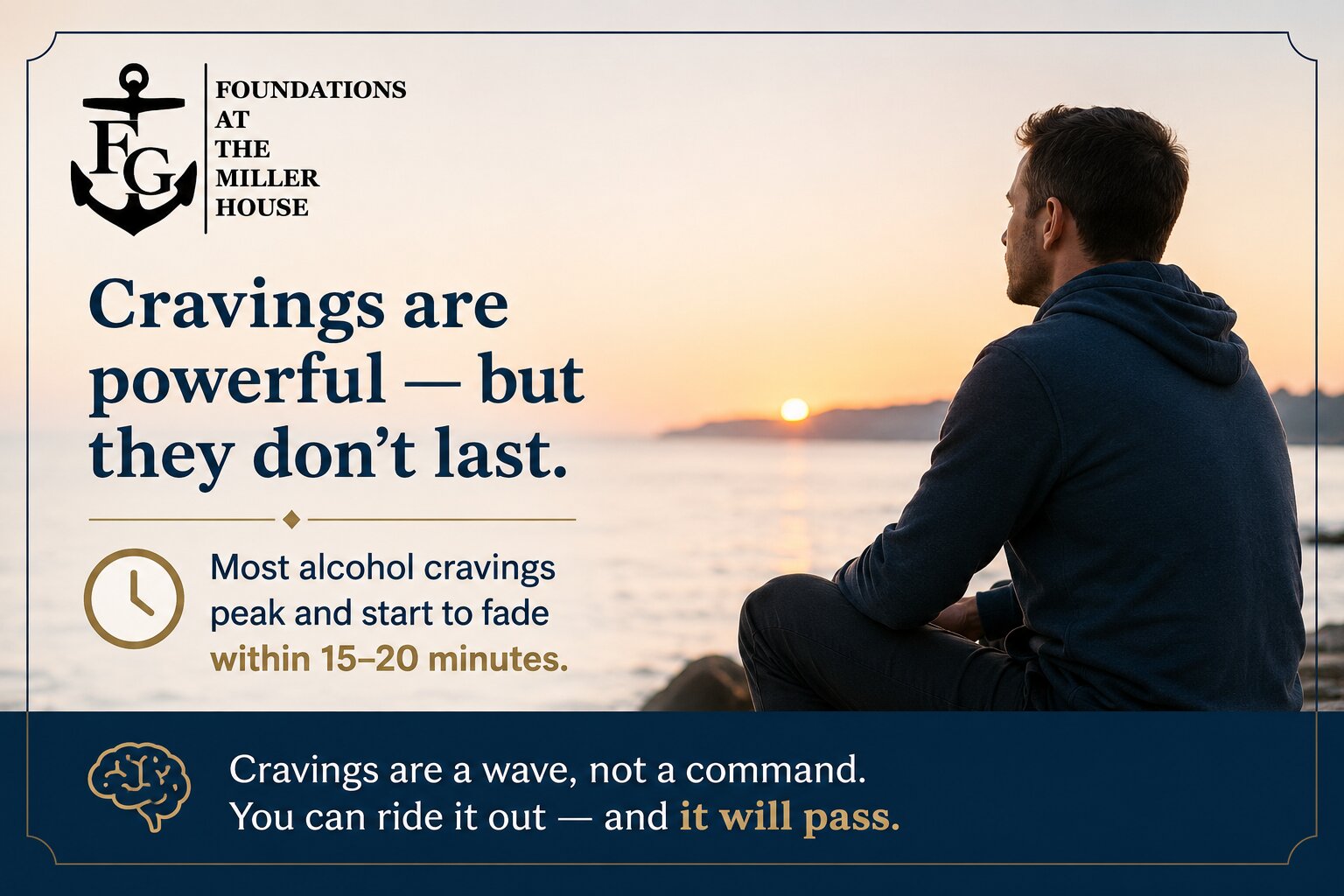
One of the most encouraging things to know is that cravings usually do not last as long as they feel.
Most cravings:
- Build gradually
- Reach their strongest point
- Begin fading within about 15 to 20 minutes
Although the exact duration varies from person to person, cravings tend to behave like waves.
They rise.
They peak.
They pass.
The challenge is that many people act on the craving before it has a chance to fade.
Learning to tolerate those uncomfortable minutes can become an important recovery skill.
Practical Ways to Get Through a Craving
You cannot always prevent cravings.
You can learn how to respond differently.
Delay the Decision
Instead of telling yourself you’ll never drink again, tell yourself you’ll wait 20 minutes before making any decision.
That small pause often reduces the intensity of the urge.
Practice Urge Surfing
Urge surfing is a mindfulness technique that encourages you to observe a craving rather than fight it.
Notice:
- Where you feel it in your body
- How intense it is
- How it changes over time
Like an ocean wave, cravings naturally rise and fall.
You don’t have to eliminate the feeling—you only have to avoid acting on it.
Change Your Environment
If possible, leave the situation that’s triggering the craving.
Take a walk.
Drive a different route.
Move to another room.
Small environmental changes can interrupt automatic habits.
Distract Yourself
Choose an activity that requires your attention for at least 15 to 20 minutes.
Examples include:
- Calling a trusted friend
- Exercising
- Listening to music
- Taking a shower
- Cooking a meal
- Working on a hobby
The goal isn’t to ignore your feelings forever.
It’s to give the craving time to lose its intensity.
Reach Out to Someone
Cravings become more powerful in isolation.
Talking with a supportive friend, sponsor, family member, therapist, or recovery peer can help reduce both the urge and the sense that you’re facing it alone.
When Are Cravings a Sign You Need More Support?
Occasional cravings can happen during recovery.
However, frequent or overwhelming cravings deserve attention.
Consider reaching out for professional help if:
- You think about drinking throughout the day.
- You repeatedly give in despite wanting to stop.
- Cravings interfere with work, relationships, or responsibilities.
- You avoid situations because you’re afraid you’ll drink.
- You’ve tried to quit multiple times without success.
At that point, the issue is no longer simply resisting a craving.
It’s understanding why the cravings remain so strong and developing healthier ways to manage them.
For many individuals, residential addiction treatment in Falmouth MA provides the structured environment needed to break established drinking patterns while addressing the emotional and psychological factors driving alcohol use.
Recovery Is About Building New Patterns
Cravings often become less frequent and less intense over time, but they rarely disappear simply because someone wants them to.
Recovery involves helping the brain create new routines.
That may include:
- Developing healthier coping skills
- Managing stress without alcohol
- Building supportive relationships
- Identifying personal triggers
- Establishing daily structure
- Continuing therapy or support groups
- Transitioning to outpatient addiction treatment on Cape Cod after a higher level of care when appropriate
Every time you respond to a craving without drinking, you’re teaching your brain that another response is possible.
Those moments may feel small, but they add up.
Final Thoughts
Cravings can feel urgent, convincing, and difficult to ignore. But they are temporary experiences—not permanent instructions. Understanding why they happen and having practical strategies ready before they occur can make them much easier to manage.
If your urges to drink are becoming more frequent, more intense, or harder to resist, that isn’t a sign that you’ve failed. It may simply mean your brain needs more support than willpower alone can provide.
If cravings are becoming harder to manage — or you can’t seem to go without a drink — that’s not a willpower problem. Our alcohol addiction treatment on Cape Cod team is here to help. Reach out anytime. Call us today at (774) 252-6966 to learn how Foundations at the Miller House can help you take the next step.
Frequently Asked Questions
How long do alcohol cravings usually last?
Most cravings peak and begin to fade within about 15 to 20 minutes. While they can feel overwhelming in the moment, they are temporary and usually decrease if you avoid acting on them.
Why do I crave alcohol even after I’ve stopped drinking?
The brain remembers past drinking habits and can respond to triggers like stress, certain places, or emotional situations. These conditioned responses may continue for some time but often become less frequent as recovery progresses.
Are alcohol cravings a sign that I need professional help?
Not always. However, if cravings are frequent, intense, difficult to resist, or repeatedly lead to drinking despite your goals, professional support can help address the underlying causes and build more effective coping strategies.