

If you’re sober curious, you may not feel “out of control.”
You may just feel… unsettled.
Maybe alcohol or other substances still “work,” technically. You’re functioning. Showing up. Paying bills. But there’s a quiet question underneath it all:
What would life feel like if I didn’t need this anymore?
That question matters. And if it’s led you to consider something immersive — like residential treatment at our Falmouth location — it’s okay to pause before deciding.
Big choices deserve thoughtful questions. The right place will welcome them.
Here’s how to choose with clarity, not pressure.
1. “Will I Be Seen — Or Just Assessed?”
There’s a difference between being evaluated and being understood.
When you first speak to a program, pay attention to how the conversation feels. Are they curious about you as a person? Your work, your relationships, your fears? Or do they move quickly to symptoms and checklists?
You are not a diagnosis.
You are not a liability.
You are not “the problem.”
Especially if you’re sober curious, you might not even identify as someone with an addiction. A respectful program allows space for that nuance. It doesn’t force labels. It explores patterns with you.
The right team feels steady. Not dramatic. Not alarmist. Just grounded.
If you hang up feeling calmer instead of smaller, that’s a good sign.
2. “What Does a Typical Day Feel Like — Not Just Look Like?”
Schedules are easy to print. Atmosphere is harder to describe.
Ask for details:
- How much time is spent in group therapy?
- What kinds of groups are offered?
- Is there individual counseling?
- What happens between sessions?
- Are evenings structured or relaxed?
- What support is available overnight?
Live-in treatment means round-the-clock support — but that doesn’t mean constant intensity. Healthy structure should create rhythm, not pressure.
For many people, especially high-functioning adults, one hidden fear is: Will I lose all independence?
A strong program balances structure with dignity. You’re supported, not micromanaged. Guided, not controlled.
Recovery isn’t about taking away your autonomy. It’s about rebuilding your relationship with yourself in a safe environment.
3. “How Do You Work With Someone Who Isn’t 100% Sure?”
This is one of the most important questions if you’re sober curious.
You might be thinking:
- “I don’t know if I’m that bad.”
- “What if I overreact?”
- “What if I go and realize I didn’t need this?”
That ambivalence isn’t weakness. It’s honesty.
Ask directly:
How do you handle doubt? How do you support someone who is still exploring their relationship with substances?
The right answer won’t sound pushy. It won’t imply that hesitation means denial. It will reflect patience.
Readiness isn’t a light switch. It’s more like a dimmer. It grows brighter when you feel safe, heard, and supported.
You deserve a place that understands that.
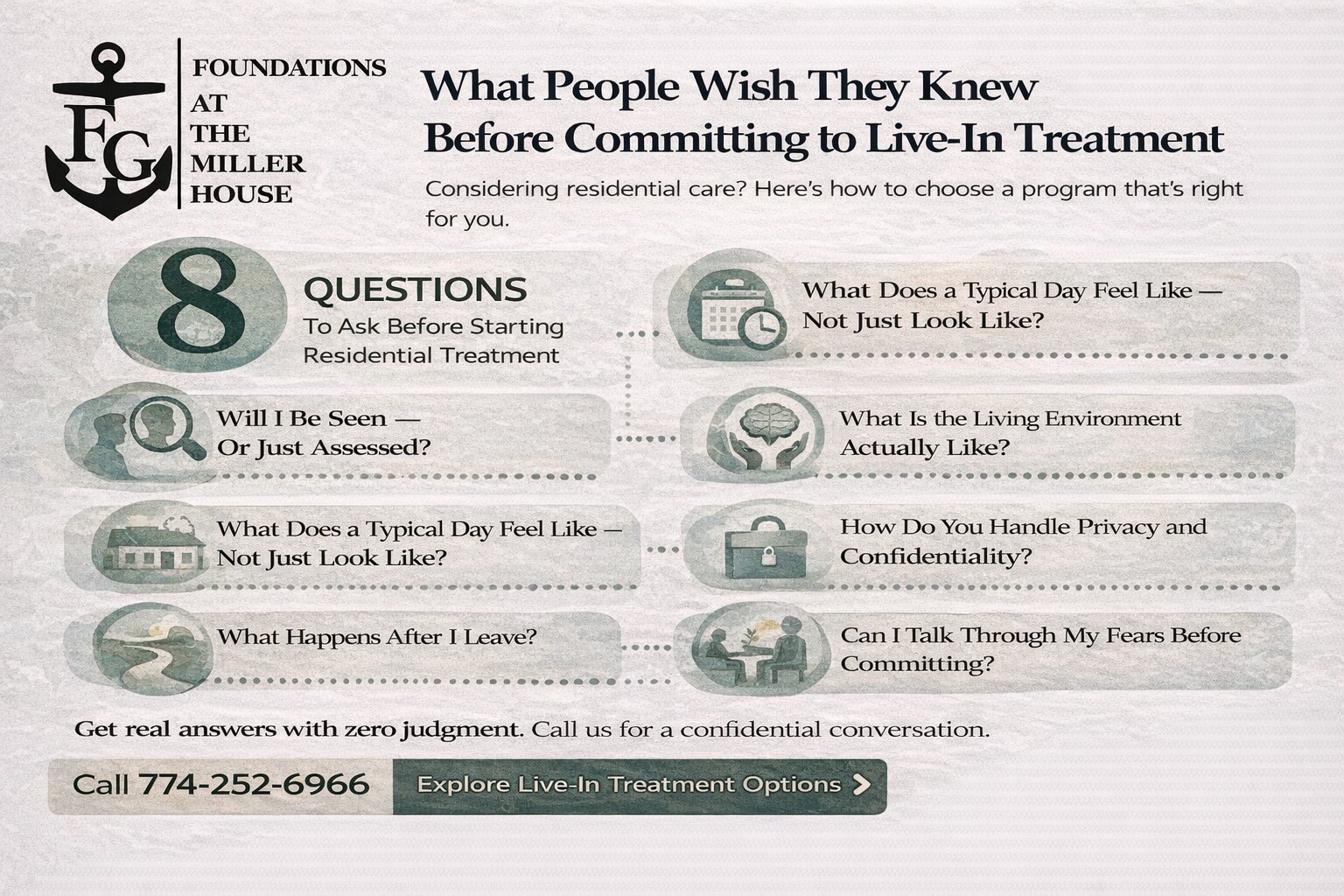
4. “What Is the Living Environment Actually Like?”
You’re not visiting. You’re staying.
Environment matters more than most people realize. When mental health and substance use collide, your nervous system is often overstimulated. The space you’re in can either calm that or intensify it.
Ask:
- Are rooms shared or private?
- What do common spaces feel like?
- Is there access to outdoor areas?
- How many residents are there at a time?
- What is the staff-to-client ratio?
A peaceful setting can lower defenses. A chaotic one can increase them.
If possible, tour the facility. Notice your body. Do your shoulders drop? Or tighten?
Sometimes the difference between staying and leaving early is simply whether you feel safe in the space.
5. “What Support Exists for Mental Health Alongside Substance Use?”
For many people, drinking or using didn’t begin in a vacuum. Anxiety, depression, trauma, burnout — these often sit underneath.
If that resonates, ask:
- How do you address co-occurring mental health concerns?
- Is there psychiatric support if needed?
- Are therapy approaches trauma-informed?
You’re not just removing a substance. You’re uncovering what’s been underneath it.
Care should reflect that depth.
6. “How Do You Handle Privacy and Confidentiality?”
This question is especially important for professionals, parents, and community leaders.
If part of your hesitation is fear of being “found out,” ask about:
- Confidentiality policies
- Communication with employers
- Discretion during intake and discharge
Healing should not come at the cost of your dignity. A reputable team understands how vulnerable this step can feel and protects your privacy carefully.
7. “What Happens After I Leave?”
This is where many people later say, I wish I’d asked more.
Immersive care can feel stabilizing. But real life resumes. Work emails. Family dynamics. Social events.
Ask:
- Is there step-down programming?
- Do you help coordinate outpatient or structured daytime care?
- Are alumni groups available?
- How do you prepare someone for returning home?
The goal isn’t just short-term stabilization. It’s sustainable change.
A thoughtful team helps you build a bridge back into your life — not just an exit door.
8. “Can I Talk Through My Fears Before Committing?”
You are allowed to be scared.
You are allowed to say:
- “I’m afraid I’ll fail.”
- “I’m afraid I’ll miss my family.”
- “I’m afraid I’ll discover something about myself I don’t like.”
Ask if you can speak with someone — clinically or administratively — without immediate commitment. A genuine conversation often tells you more than a brochure ever could.
Choosing a residential treatment program is a significant decision. It should feel collaborative, not transactional.
If you leave the conversation feeling clearer instead of cornered, that matters.
FAQ: Honest Questions People Ask Before Stepping Away for Care
How long does live-in treatment usually last?
Length of stay varies depending on individual needs, progress, and clinical recommendations. Some people stay a few weeks; others benefit from longer support. What matters most is not the exact number of days — it’s whether the time allows for real stabilization and skill-building.
Will I lose my job if I go?
Many employers are protected under federal laws that allow for medical leave. Programs can often guide you through conversations about leave options. If employment is a major concern, ask directly how the team supports working professionals.
What if I decide it’s not right for me once I’m there?
A reputable program will discuss expectations clearly before admission. Treatment works best when there’s collaboration and communication. If concerns arise, they should be addressed respectfully — not dismissed.
Is it normal to feel like I might be “overreacting”?
Yes. Especially for sober curious individuals who are functioning externally. But needing help doesn’t require catastrophe. It’s okay to intervene early rather than wait for something to break.
What if I’ve never done therapy before?
That’s common. Many people enter immersive care having never worked with a therapist. You don’t need to know the language of recovery. You just need openness and honesty.
Will I be pressured into a specific identity or recovery path?
Quality programs individualize care. If you value autonomy, ask how different recovery philosophies are integrated. The right fit should feel aligned with your values, not imposed upon you.
A Quiet Truth About This Decision
Most people don’t regret asking more questions.
They regret ignoring the quiet voice that said, Something needs to change.
You don’t have to hit a dramatic bottom. You don’t have to wait for consequences to stack up. Sometimes the bravest thing you can do is explore a different path before the ground gives way.
If you’re looking for thoughtful, compassionate treatment in Falmouth, know that you don’t have to figure this out alone. Our team understands the nuance of being sober curious — unsure, hopeful, and quietly ready for something different.
If you’re ready to talk it through, we’re here.
Call (774) 252-6966 or visit our residential treatment program services in Falmouth, MA to learn more about what next steps could look like for you.